Industrial workplaces are among the most hazardous environments out there. Heavy machinery, chemical exposure, extreme temperatures, and high-pressure systems all create risks that can have serious consequences when left unmanaged. The good news? Most workplace injuries are preventable.
Whether you manage a manufacturing floor, a warehouse, or a processing facility, building a strong safety culture starts with getting the basics right. Here are nine essentials every industrial team needs to prioritize.
1. Personal Protective Equipment (PPE)
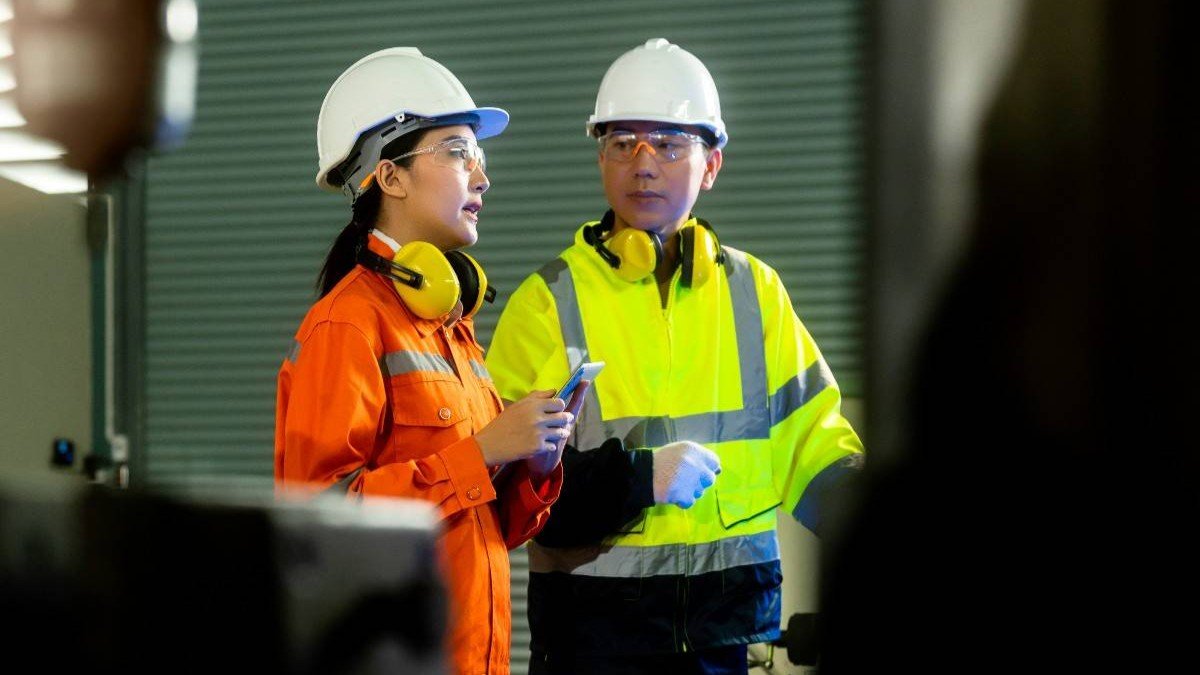
PPE is the last line of defense between a worker and a workplace hazard. Hard hats, safety goggles, gloves, steel-toed boots, and high-visibility vests should be standard issue for anyone working on an industrial site.
The key is ensuring PPE is well-maintained, properly fitted, and actually worn. Equipment that doesn’t fit correctly offers limited protection and is more likely to be discarded.
2. Job-Specific Safety Training
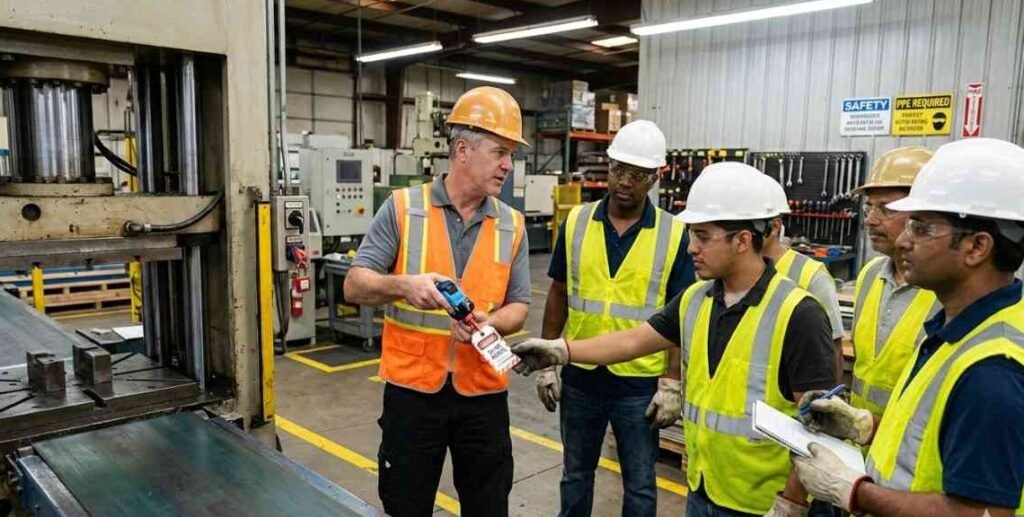
Generic safety training only goes so far. Workers need instruction that reflects the specific hazards of their role. A forklift operator faces different risks than someone handling chemical compounds, and their training should reflect that.
Regular refresher courses also matter. Procedures change, equipment gets updated, and new hazards emerge—training should keep pace with these shifts.
3. High-Quality Workwear
The clothing workers wear on the job plays a bigger role in safety than many people realize. Ill-fitting or damaged workwear can snag on machinery, fail to protect against hazards, or reduce visibility in dangerous environments.
For industrial teams, partnering with a reliable provider for uniform rentals in Lansing ensures workers consistently have access to well-maintained, job-appropriate garments—without the burden of managing workwear in-house.
4. Clear Hazard Communication
Workers need to know what they’re working with. Proper labeling of chemicals, clear signage near hazardous equipment, and accessible Safety Data Sheets (SDS) are non-negotiable in any industrial setting.
OSHA’s Hazard Communication Standard exists for a reason. When workers understand the risks around them, they’re far better equipped to avoid them.
5. Regular Equipment Inspections
Machinery that isn’t maintained is machinery waiting to fail. Scheduled inspections catch wear, damage, and malfunctions before they become safety incidents.
Create a documented inspection schedule, assign clear responsibilities, and ensure any flagged issues are addressed promptly—not deferred until “next quarter.”
6. Emergency Response Plans
Every industrial facility needs a clear plan for what happens when things go wrong. Fire, chemical spill, power failure, serious injury—each scenario should have a documented response procedure that workers know and have practiced.
Drills aren’t optional. Running through emergency scenarios regularly helps workers respond with confidence rather than panic when a real incident occurs.
7. Ergonomics and Manual Handling Protocols
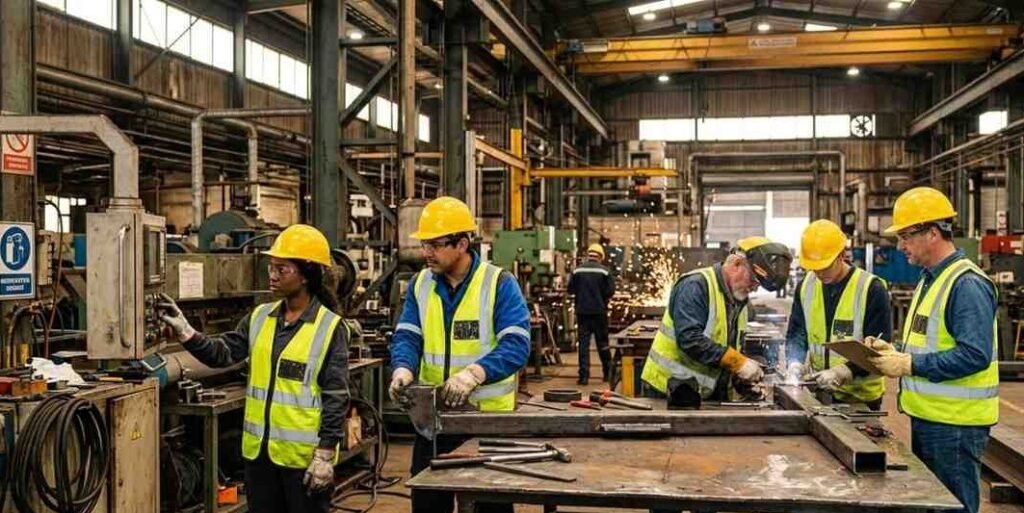
Musculoskeletal injuries account for a significant portion of workplace incidents in industrial settings. Repetitive strain, improper lifting, and poorly designed workstations all take a toll on workers over time.
Investing in ergonomic equipment and training workers on proper manual handling techniques is one of the most cost-effective safety measures a facility can implement.
8. Fatigue Management
Fatigue is one of the most underestimated safety risks in industrial environments. Tired workers make more mistakes, react more slowly, and are more prone to lapses in judgment—all of which can have serious consequences around heavy equipment.
Shift scheduling, mandatory rest breaks, and open channels for workers to flag exhaustion are all part of a responsible fatigue management approach.
9. A Culture of Reporting
Perhaps the most important item on this list has nothing to do with equipment. A workplace where near-misses and safety concerns are reported openly—without fear of blame or retaliation—is one that continuously improves.
Encourage workers to speak up. Track incidents and near-misses to identify patterns. And when someone raises a concern, act on it. Safety culture is built from the top down, but it’s sustained by everyone.
Building Safety Into Every Workday
Industrial safety isn’t a box to check during an annual audit. It’s an ongoing commitment that shows up in the tools workers use, the layout planning, the training they receive, the clothes they wear, and the culture they operate in.
Start with the essentials outlined above, then build from there. Facilities that take a proactive approach to safety don’t just reduce injuries—they retain better workers, reduce downtime, and build teams that perform with confidence.