
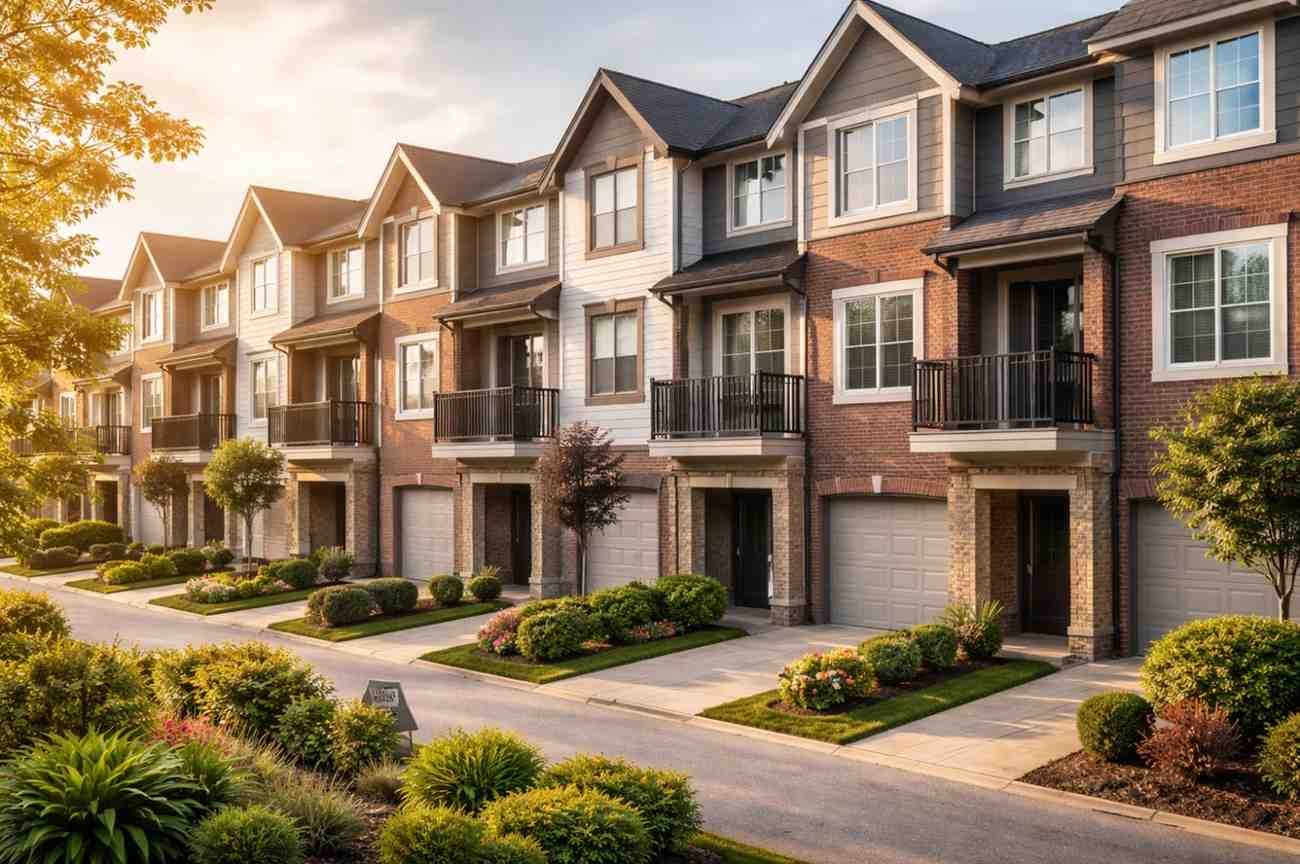
Townhomes bridge the gap between single-family homes and condos, making them popular for both buyers and investors. However, their popularity does not automatically guarantee profitability. This guide explores the financial aspects of townhome ownership—including costs, rental potential, and comparisons to other real estate—to help you determine if they are a smart move for your investment portfolio.
Understanding Townhome Ownership
Before diving into the numbers, it is crucial to understand exactly what you are buying. A townhome (or townhouse) is typically a multi-floor home that shares one or two walls with adjacent properties but has its own entrance. Unlike a condo, where you usually own just the interior of your unit, townhome ownership often includes the land the home sits on, and sometimes a small front or backyard.
This distinction is important for investment purposes because land value is a key driver of real estate appreciation. However, townhomes almost always come with a Homeowners Association (HOA). The HOA manages common areas like roofs, exteriors, landscaping, and shared amenities like pools or gyms. In exchange, you pay a monthly or quarterly fee.
These fees can vary wildly depending on the community’s age, amenities, and location. While an HOA handles tedious maintenance tasks, their rules can also restrict how you use the property—for instance, limiting your ability to rent it out on platforms like Airbnb.
The Investment Potential: Appreciation and Income

When evaluating any real estate investment, you are generally looking at two things: cash flow (rental income) and appreciation (value increase over time).
Appreciation
Historically, single-family homes have appreciated faster than townhomes and condos. The reason is scarcity; land is finite, and detached homes usually come with more of it. However, townhomes generally appreciate better than condos. Because you often own the land beneath the structure, townhomes track closer to single-family market trends than high-rise units do.
In high-demand urban areas where land is expensive, townhomes can see significant appreciation because they offer a lower price point for entry than detached houses, making them attractive to a large pool of buyers.
Rental Income
Townhomes can be excellent rental properties. They appeal to tenants who want the feel of a house—like a private entrance, a garage, or a small yard—without the maintenance of a large detached home. Families or professionals who can’t afford a single-family mortgage often rent townhomes as a happy medium.
Furthermore, because the purchase price is typically lower than a detached house, your potential return on investment (ROI) via rent can be higher, provided the HOA fees don’t eat too much into your profits.
Financial Considerations: The Hidden Costs

The sticker price is just the beginning. To determine if a townhome is a good investment, you must calculate the ongoing carrying costs.
- HOA Fees: This is the biggest variable. High fees can kill cash flow. You need to verify what the fee covers. If it includes insurance on the exterior, trash removal, and landscaping, it might actually save you money compared to maintaining a detached house yourself.
- Property Taxes: Generally, taxes on townhomes are lower than single-family homes in the same area because the lot sizes are smaller and assessed values are often lower.
- Insurance: You will need a specific type of homeowners insurance (often HO-3 or HO-6 depending on the deed structure). Since the HOA’s master policy usually covers the exterior and structural elements, your personal policy might be cheaper than what you’d pay for a fully detached home.
- Mortgage Rates: Interest rates for townhomes are typically similar to single-family homes, but if the development is classified more like a condo by lenders, you might face slightly stricter lending requirements or higher rates.
Pros and Cons of Townhome Investment
Every asset class has trade-offs. Here is a balanced look at the advantages and disadvantages.
Advantages
- Lower Entry Price: Townhomes are usually more affordable than detached homes, allowing investors to enter the market with less capital.
- Lower Maintenance: The HOA typically handles exterior repairs, lawn care, and snow removal. This is ideal for remote investors or those who don’t want to be hands-on landlords.
- Strong Tenant Demand: They attract stable, long-term tenants who value community amenities and residential vibes.
- Amenities: Access to pools, clubhouses, and gyms can be a major selling point for renters and future buyers.
Disadvantages
- HOA Fees: These fees never go away and usually increase over time. A sudden hike in fees can ruin your profit margin.
- HOA Rules: Restrictive covenants can limit your ability to rent the unit, change the exterior, or have pets.
- Slower Appreciation: While they do gain value, they typically lag behind single-family homes in competitive markets.
- Privacy Issues: Sharing walls means noise can be an issue, which might lead to tenant turnover or disputes with neighbors.
Market Analysis and Risk Assessment

Real estate is hyper-local. A townhome might be a goldmine in a dense metro area but a struggle in a rural town where land is cheap.
Currently, demographic shifts favor townhomes. Millennials are entering their prime home-buying years but often find single-family homes out of budget. Baby boomers are downsizing and looking for low-maintenance living. Both groups fuel demand for townhomes.
However, you must assess the specific risks.
- Special Assessments: If the community roof needs replacing and the HOA reserves are low, every owner gets hit with a “special assessment”—a mandatory bill that can cost thousands of dollars. Always review the HOA’s financial health before buying.
- Market Saturation: In some areas, developers are overbuilding attached housing. If supply outpaces demand, your property value could stagnate.
Townhomes vs. Single-Family Homes vs. Condos
How does a townhome stack up against the competition?
- Vs. Single-Family Homes: Detached homes offer the best appreciation and total control (no shared walls, usually no HOA). However, they cost significantly more to buy and maintain. Townhomes offer a middle path—lower appreciation but better cash flow potential and less physical work.
- Vs. Condos: Condos are often the cheapest option but come with the highest HOA fees and the lowest appreciation rates. You also own no land. Townhomes generally outperform condos as long-term investments because the land component drives value retention.
Maintenance: Who Pays for What?
One of the most attractive aspects of townhome investment is the “lock and leave” lifestyle, but you need to be clear on liabilities.
Typically, the “studs out” (siding, roof, common grounds) are the HOA’s problem. The “studs in” (drywall, appliances, flooring, plumbing) are your problem. If a pipe bursts inside a wall you share with a neighbor, things can get complicated.
Always read the Covenants, Conditions, and Restrictions (CC&Rs) document. It spells out exactly where your responsibility ends and the association’s begins. For investors, this predictable maintenance model is helpful for forecasting expenses, as you don’t need to budget for a new roof every 20 years—you just budget for the monthly HOA fee.
Future Trends in Townhome Development
The future looks bright for medium-density housing. As urban sprawl hits its limits and cities try to combat housing shortages, zoning laws are changing to encourage townhome construction.
We are seeing a rise in luxury townhomes that rival high-end houses, complete with elevators and rooftop terraces. Conversely, entry-level townhomes remain a crucial stepping stone for first-time buyers.
For example, looking at specific growing markets can reveal opportunities. You might find newly built townhomes for sale in Payson that cater to buyers priced out of larger metropolitan hubs, offering modern amenities at a fraction of the cost. Following these migration patterns—where people are moving for affordability—is a smart strategy for finding high-growth investment properties.
Conclusion
Townhome investing is a sustainable wealth-building strategy that balances affordability, strong rental demand, and lower maintenance. While they might appreciate slower than single-family homes, townhomes offer stability and simpler management. They are a solid choice for investors who prioritize cash flow and low upkeep, as long as the HOA’s financials are sound.