
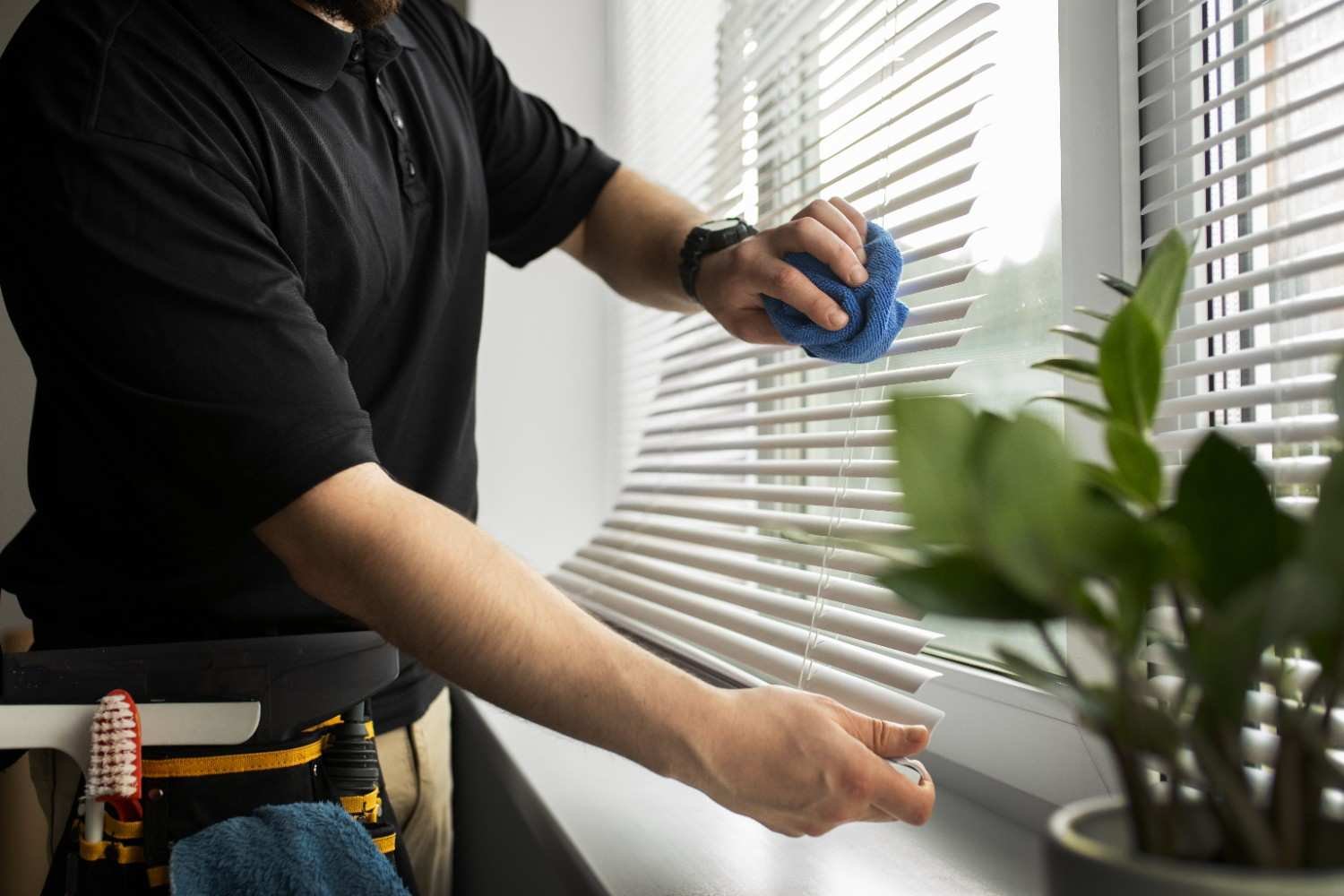
Cleaning blinds often slips to the bottom of the to-do list, not because it’s a tough job, but because it feels like a guessing game. One wrong move and the slats can warp, fade, rust, or collect stubborn stains that never quite disappear.
What makes the task tricky is that blinds aren’t all built the same; wood, vinyl, metal, and fabric each react differently to moisture, cleaners, and pressure.
Taking a few minutes to understand the right cleaning method for your specific material can completely change the outcome. With the proper approach, blinds stay brighter, operate smoothly, and hold their finish far longer than most people expect.
General Cleaning Steps for All Blind Types
Before getting into material-specific methods, it helps to start with a few basics. These simple steps work for nearly every type of blind. They create a clean foundation before any deeper cleaning.
Dust Regularly
A simple microfiber cloth, feather duster, or vacuum brush head is enough to keep everyday dust under control. A quick pass every week prevents that stubborn buildup that makes deep cleaning a chore later.
Work From Top to Bottom
Dust always drifts downward, so beginning at the top keeps you from having to redo the lower slats.
Clean Both Sides
Close the slats in one direction to wipe the front, then flip them the opposite way to reach the back. It’s the easiest way to get an even, thorough clean.
Spot Clean Quickly
A mild soap-and-water solution works for most non-wood blind types. Quick spot cleaning stops stains from setting in.
Use the Right Tools
Helpful tools include microfiber gloves, blind-cleaning tongs, soft sponges, and a vacuum upholstery nozzle. Smaller areas around cords and headrails can be cleaned with a soft-bristle toothbrush.
Comparison Table: Best Cleaning Method by Blind Material

Here’s a clear breakdown of how each material should, and shouldn’t, be cleaned:
| Material | Regular Maintenance | Deep Cleaning (If Needed) | Important Notes |
| Wood Blinds | Dust with microfiber; treat with wood polish occasionally | Light spot-cleaning with a barely damp cloth and wood-safe cleaner | Do not use water; it prevents warping and discoloring |
| Faux Wood Blinds | Dust regularly | Wipe with mild soap and water; rinse lightly | Do not soak; dry fully before rehanging |
| Vinyl Blinds | Dust or vacuum | Bathtub soaking with mild dish soap; gentle scrubbing | Avoid abrasive scrubbers that scratch the surface |
| Metal/Aluminum Blinds | Dust weekly; vacuum deeper dust | Bathtub soaking or wipe-down with soapy water | Dry thoroughly to prevent moisture-related rust |
| Fabric Blinds | Vacuum with upholstery brush on low suction | Spot clean with mild soap; follow manufacturer care labels | Do not immerse unless approved by care instructions |
How to Clean Wood Blinds
Wood blinds add warmth and character to a space, but they’re far more delicate than they appear. Moisture can cause them to warp, fade, or swell. One wrong cleaning step is often all it takes to damage them.
Regular Maintenance
Dusting is the safest way to maintain real wood blinds. A microfiber cloth is gentle on finishes, and occasional use of lemon oil or a wood-safe conditioner keeps the slats nourished and glossy.
Deep Cleaning
If a mark or smudge appears, use a wood cleaner applied to a barely damp cloth. The cloth should never be wet; excess water seeps into the wood and causes swelling or warping.
How to Clean Vinyl and Metal Blinds
 Vinyl and aluminum blinds are surprisingly low-maintenance compared to other types. They handle everyday dirt and grime without much effort. Their ability to withstand moisture makes them a popular choice for kitchens and bathrooms.
Regular Maintenance
Dusting or vacuuming usually handles day-to-day buildup. In kitchens, blinds may accumulate grease; warm water mixed with mild dish soap or a water–vinegar solution loosens sticky residue effectively.
Deep Cleaning
The bathtub method works well for these materials:
- Remove blinds carefully.
- Fill a bathtub with warm water and a small amount of dish soap.
- Submerge the blinds and soak for about an hour.
- Gently scrub with a soft sponge or brush.
- Rinse thoroughly using clean water or a shower wand.
- Dry completely before rehanging.
Metal blinds especially need full drying to avoid rust or water spots.
How to Clean Fabric Blinds
Fabric blinds come in all styles, from vertical panels to Roman and roller designs, but they all share one thing: they’re more delicate than they look. Dust and dirt settle into the fibers easily. That’s why a slow, gentle cleaning approach works best.
Regular Maintenance
Vacuuming is the best way to keep fabric blinds clean. Use a brush attachment on low suction to avoid pulling or stretching the fabric.
Spot Cleaning
A mild soap solution and a clean, damp cloth work well for small stains. Light dabbing is more effective than rubbing, which can spread the stain or damage fibers.
Washing Considerations
Some fabric blinds can be machine-washed on a delicate cycle, but only if their care label indicates it. Most fabric blinds should not be soaked or fully immersed.
How to Deep Clean Blinds Safely
 Deep cleaning with full water immersion isn’t safe for every type of blind. Only sturdier materials like vinyl, faux wood, and aluminum can handle being soaked without warping or staining. Knowing this upfront prevents a lot of costly mistakes.
Removal
Take the blinds off their brackets and lay them flat or rolled, depending on design.
Soaking
Place them in warm water mixed with a small amount of mild dish soap. Avoid bleach or harsh detergents, which can discolor finishes.
Scrubbing
After soaking for at least an hour, use a soft sponge or brush to remove remaining dirt. Pay attention to edges and areas near cords.
Rinsing
Suds left behind create streaks. A shower wand or detachable showerhead works well for thorough rinsing.
Drying
Blinds must be completely dry before being rehung. Proper drying prevents mold, mildew, rust, and permanent water marks.
Helpful Tips for Better Results
Reduce Static Buildup
After cleaning, wiping slats with a dryer sheet helps repel dust and keeps blinds cleaner for longer.
Remove Kitchen Grease
For vinyl and aluminum blinds near stoves, a mixture of warm water and vinegar cuts through grease without damaging the material.
Clean the Headrail and Cords
Dust often settles around internal components. A soft toothbrush helps clean tight or angled spaces.
Maintenance Frequency
- Weekly: Light dusting
- Monthly: Spot clean problem areas
- Every 3–4 months: Full wipe-down
- Yearly: Deep clean if material allows

Frequently Asked Questions
1. What is the best way to clean blinds without taking them down?
A microfiber cloth or a vacuum brush attachment works well for quick maintenance. For vinyl and metal blinds, a slightly damp microfiber cloth offers a deeper clean while still keeping the blinds on the window.
2. How often should blinds be cleaned?
Light dusting once a week prevents buildup and makes deep cleaning easier. Homes with pets or heavy cooking might need more frequent cleaning.
3. Can blinds be soaked in water?
Only vinyl, faux wood, and metal blinds are safe to soak. Wood and most fabric blinds should never be immersed.
4. Are faux wood blinds cleaned like real wood?
Not exactly. Faux wood blinds can handle mild water and soap, while real wood blinds should never be washed with water. Faux wood is a better option for humid rooms.
Final Thoughts
Understanding how to clean blinds comes down to knowing the material and treating it accordingly. Wood blinds require dry, gentle care, while vinyl and metal blinds can handle deeper washing. Fabric blinds need regular vacuuming and careful spot cleaning.
Following manufacturer instructions and using the right cleaning tools keeps blinds looking sharp and functioning smoothly for years. Maintaining blinds doesn’t have to be complicated. With a simple routine and proper techniques, any blind, no matter the material, can stay fresh, clean, and long-lasting.