
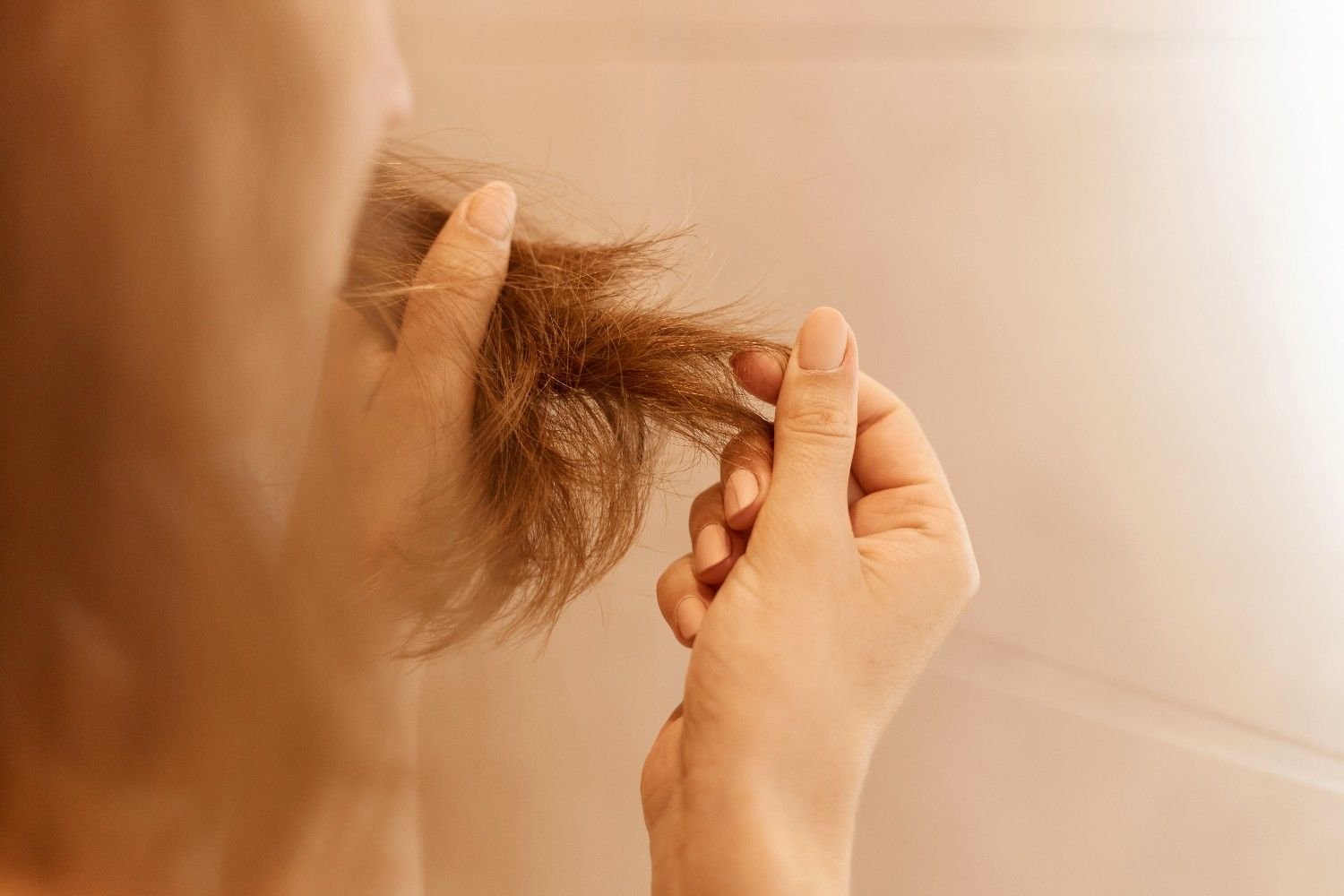
Have you ever run your fingers through your hair only to feel rough, frayed ends that refuse to behave no matter how much serum you use? Most of us have that moment where we stare at the mirror, noticing tiny white dots or little Y-shaped strands at the bottom and think, why does my hair do this?
That frustration is exactly why so many people search for how to fix split ends in hopes of finding a real solution that does not require cutting their hard-earned length.
The reality is simple. You cannot glue a split strand back together, but you can absolutely make your hair look healthier, stop the damage from spreading, and prevent new split ends from forming. Healthy, smooth hair is possible with the right habits and care.
Why Split Ends Happen
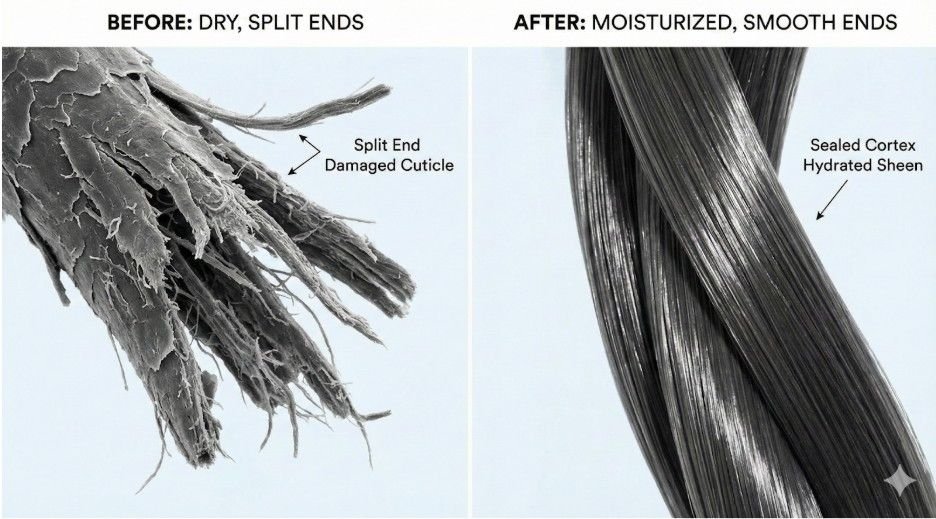
Split ends form when the hair cuticle becomes weak or worn down. This can occur due to heat styling, chemical treatments, rough brushing, dryness, sun exposure, or everyday friction. Once the outer layer breaks, the strand begins to fray. If left untreated, that split keeps traveling upward, making the hair look thin, brittle, and uneven.
How to Fix Split Ends Properly
The only real way to fix split ends is to trim them, but you can also smooth their appearance and prevent new ones by using gentle hair care habits.

Professional Trim
A trim is the most reliable solution. A stylist can remove damaged ends cleanly, since they know how to prevent the split ends from moving higher up the strand. Most experts recommend trimming every 6 to 8 weeks to maintain healthy ends. Regular trims preserve length long term and is one of the best ways to stop hair breakage before it spreads.
Hair Dusting
Hair dusting removes only the frayed tips while keeping your overall length. Your stylist will trim tiny, visible split ends along the surface of your hair. This is ideal for anyone growing out their hair and wanting minimal removal.
Search and Destroy Method
For a careful at home approach, you can manually snip individual split ends. Always use sharp hair cutting shears, never kitchen scissors. Work on dry hair in small sections, identifying and trimming only the damaged ends. This process is slow but effective for maintaining smoothness between trims.
Temporary Fixes That Improve Appearance
While you cannot repair a split permanently, certain products can temporarily seal and disguise them. These smoothing treatments help your hair look healthy until your next wash.
Split End Serums
Choose serums with keratin, lightweight oils, amino acids, or peptides. These ingredients coat the strands and bind the frayed sections together. The result is smoother looking ends with added shine.
Hair Oils
A few drops of argan oil, sweet almond oil, coconut oil, or jojoba oil can soften the hair and reduce the appearance of dryness. Oils help minimize frizz, improve slip, and make the ends look more polished.
Deep Conditioning Masks
Weekly masks add hydration, strength, and elasticity. Look for formulas with shea butter, hydrolyzed proteins, panthenol, and glycerin. A well hydrated strand is far less likely to split again.
Prevention Strategies That Work
Prevention is the only long term solution. When you protect the cuticle, you prevent new splits and reduce breakage dramatically.

Be Gentle
Hair is at its weakest when wet. Avoid rough towel drying or heavy brushing. Pat the hair dry with a microfiber towel or a soft cotton T shirt. Minimize friction whenever possible.
Limit Heat
Repeated heat exposure on the hair results in breaking down the cuticle. Keep temperatures low, use hot tools less often, and always apply a heat protectant before blow drying, curling, or straightening. Air dry when possible to reduce stress on your ends.
Brush Correctly
Use a wide tooth comb or a flexible detangling brush. Always start from the ends and gradually move upward to reduce pulling. Avoid plastic combs which increase static and friction. Wooden or bamboo tools are gentler on the hair cuticle.
Stay Hydrated
Hydrated hair is stronger and more elastic. Drink enough water and use moisturizing shampoos, conditioners, and leave ins. Dry hair splits faster, so maintaining moisture is key to long term hair health.
Protect Your Hair Overnight
Friction from cotton pillowcases can cause breakage. Switch to a silk or satin pillowcase to keep your ends smooth. Sleep with your hair in a loose braid or low ponytail and avoid tying up wet hair before bed.
When to Consult a Professional
If you continue experiencing widespread breakage despite a gentle routine, consult a stylist or trichologist. Chronic split ends may indicate chemical overprocessing, protein imbalance, or environmental stress. Professional treatments such as bond building systems, keratin treatments, or deep restorative therapies may help strengthen severely damaged strands.
Frequently Asked Questions
1. What is the only real way to fix split ends?
The only true way to fix split ends permanently is to cut them off. No product can fuse a split strand back together. Treatments can smooth and seal the ends temporarily, but trimming is the only long lasting solution.
2. How can I reduce split ends without cutting my hair?
You can improve their appearance with serums, hair oils, and hydrating masks. You can also use the search and destroy method to snip individual damaged strands. Prevention measures like gentle detangling and limiting heat make a big difference over time.
3. Does deep conditioning repair split ends?
Deep conditioners do not repair splits, but they best strengthen and moisturize the hair. This reduces future breakage and makes the ends look smoother and healthier.
4. How often should I get a trim to prevent split ends?
Most people benefit from trimming every 6 to 8 weeks. If you use heat tools often or color your hair, you may need trims more frequently to avoid extensive damage.
Healthy Hair Starts With Smarter Habits
Learning how to fix split ends is not about treating damage once it appears. It is about building a routine that keeps your hair protected every day. The more gently you treat your hair, the less it will break, and the healthier it will grow. Simple changes like lowering heat, brushing carefully, and hydrating your strands create long term strength. You do not need complicated solutions. You need consistent habits that protect your hair from the root to the tip. With the right approach, smooth and strong ends are completely achievable.