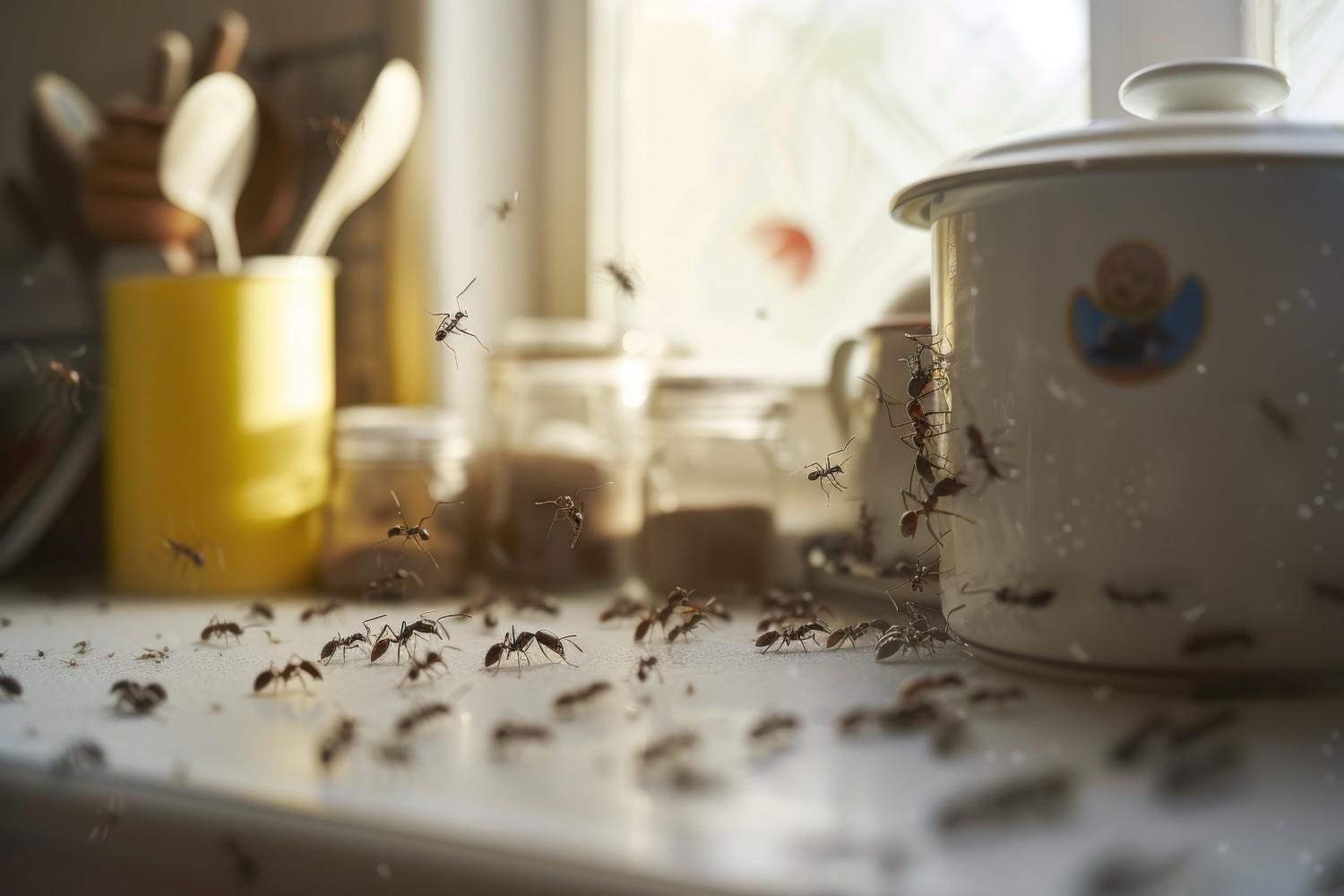
Ants in the kitchen can feel relentless. They stream in from cracks you didn’t know existed, circle the sink, swarm around crumbs, and reappear no matter how often they’re wiped away.
The instinct is to spray the ones in front of you, but that rarely solves the problem. Real, lasting success comes from understanding what attracts them, disrupting their scent trails, targeting the colony itself, and blocking new entry points. When those pieces work together, the kitchen finally stops being an open invitation for an ant invasion.
Why Ants Target Kitchens

Ants don’t wander into a kitchen by accident. They’re drawn to the same things people are: food, water, and easy access, and a kitchen delivers all of that, even when it looks spotless. What many people don’t realize is that ants rely on pheromone trails, a chemical breadcrumb path left behind by other ants.
Once that trail is established, they’ll keep marching in until it’s removed. Even tiny details like crumbs beneath a toaster, a sticky ring around a honey jar, or a little water pooled near the sink are enough to catch a scout ant’s attention. And when that scout finds something worth reporting, the rest of the colony isn’t far behind.
Step 1: Remove Food and Water Sources
Before any bait or repellent can work, the environment must stop rewarding ants.
Clean surfaces thoroughly
Wiping surfaces with plain water doesn’t remove pheromone trails. A 1:1 mixture of vinegar and water is effective for clearing residue and disrupting scents. Surfaces to clean daily include:
- Countertops
- Stovetops
- Sinks and faucet bases
- Cabinet edges
- Appliance bottoms
Food residue under toasters and microwaves is often the biggest overlooked attraction.
Store food in airtight containers
Sugar, flour, cereals, pet food, and even condiments attract ants. Airtight containers prevent access, and keeping fruit inside the fridge helps reduce sweet scents in the air.
Fix moisture problems
Ants search for water just as eagerly as they search for food.
- Repair dripping faucets
- Do not leave wet sponges or cloths on the counter
- Empty the sink instead of soaking dishes overnight
- Wipe down wet areas after cleaning
Once food and moisture disappear, ant activity drops sharply.
Step 2: Use Baits to Eliminate the Colony
Baiting is the most effective solution. Spraying visible ants kills only the workers; the colony remains untouched. Baits allow ants to carry poison back to the nest, spreading it to the queen.
Commercial baits
Pest-control companies consistently recommend these products:
- Terro Liquid Ant Baits – best for sugar-seeking ants
- Advion Ant Gel – highly effective across multiple species
- Combat Max Ant Bait – ideal for grease or protein-loving ants
Place baits directly along ant trails and near entry points. Avoid moving baits once placed—ants must be allowed to feed and carry the solution back.
DIY borax bait
A simple homemade option:
- ½ cup sugar
- 1½ tablespoons borax
- 1½ cups warm water
Soak cotton balls in the mixture and place them in small containers where ants travel. This works especially well for sugar-attracted species.
Patience is essential
Baits need a few days to work so ants can carry the poison back to the colony. Removing them too early breaks that cycle. When ants stop showing up for 48–72 hours, the colony is likely gone.
Step 3: Seal Kitchen Entry Points
Once the colony is under control, blocking entry routes prevents future problems.
Identify access areas
Ants commonly enter through:
- Cracks near windows and baseboards
- Gaps around plumbing pipes
- Loose tile edges
- Openings near door frames
Following a trail backward usually reveals the primary entry point.
Seal gaps properly
For long-term prevention:
- Use caulk or silicone to seal cracks
- Install weatherstripping around loose doors or windows
- For small, temporary gaps, use petroleum jelly or poster putty
Sealing entry points is one of the strongest preventative measures because it blocks scouts entirely.
Step 4: Use Natural Repellents for Added Protection
The natural deterrents won’t kill the colony, but they help discourage new trails inside the kitchen.
Vinegar spray
A diluted vinegar solution helps mask scent trails and makes the area less inviting.
Essential oil mixtures
Peppermint and tea tree oil work particularly well. A light mist around window sills, door frames, and baseboards provides added defense.
Spice barriers
Cinnamon, cayenne pepper, coffee grounds, and black pepper can be sprinkled along entry points. These irritate ants enough to keep them from crossing.
Use repellents only after baiting
If used before baiting, repellents can scatter ants and make it harder for them to find the bait. Always bait first, then repel.
Step 5: Strengthen Long-Term Prevention
Ant control works best when supported with consistent habits.

Adopt simple daily routines
- Sweep and vacuum floors often
- Avoid leaving dirty dishes in the sink
- Clean sticky jars like honey, jam, and peanut butter
- Empty trash cans frequently
- Keep pet food off the floor when possible
- Reduce indoor humidity if the kitchen feels damp
With good maintenance, ants rarely return.
Comparison Table: Ant Control Methods and Their Purpose
| Method | Goal | How It Works | Best Use Case | Effectiveness |
| Commercial Baits (Terro, Advion) | Kill colony | Ants carry poison back to the queen | Active trails inside the kitchen | Very High |
| DIY Borax Bait | Kill colony | Sugar attracts ants; borax poisons the nest | Budget-friendly control | High |
| Vinegar Solution | Remove scent trails | Disrupts pheromones | Cleaning surfaces daily | Medium |
| Essential Oils | Repel ants | Strong scents deter movement | Entry points & corners | Medium |
| Cinnamon/Spices | Create barriers | Ants avoid powdered irritants | Door frames & window areas | Low |
| Sprays | Kill visible ants only | Instant kill on contact | Quick temporary relief | Low |
| Caulking & Sealing | Block future access | Closes cracks & gaps | Long-term prevention | Very High |
FAQs
1. How long does it take to get rid of ants in the kitchen?
Most household colonies respond within two to four days when using properly placed baits. Larger or multiple colonies may require a full week. Sprays alone rarely solve the problem because they don’t reach the queen.
2. Where is the best place to put ant baits?
Place baits along active trails, near baseboards, under the sink, behind appliances, or close to cracks where ants enter. Baits should remain undisturbed while ants feed.
3. Do natural remedies actually work?
Natural remedies help deter ants and disrupt trails, but they don’t eliminate the colony. They work best when combined with baiting and sealing entry points.
4. Can borax bait be used around pets?
Only with caution. Borax can be harmful if ingested. Place homemade baits in small containers or use commercial sealed bait stations in pet-friendly homes.
Final Thoughts
Removing ants from the kitchen is a process, not an overnight fix. Real, lasting control comes from cutting off their food and water, using the right bait, sealing every entry point, and bringing in natural deterrents only after the bait has done its job.
When these steps are followed consistently, any activity fades quickly and rarely comes back. Most homeowners see a dramatic difference within a few days, and the kitchen becomes far less inviting to new scout ants. With a little patience and routine maintenance, the space stays ant-free long term.