
Quantum computing made a major shift in 2024. The biggest progress was not simply creating machines with more qubits. The year’s most important advances focused on making quantum systems more reliable, useful, and ready for real-world adoption. The top quantum computing innovations of 2024 included breakthroughs in error correction, logical qubits, quantum processors, cybersecurity, and commercial applications.
When I looked beyond company announcements and processor specifications, I found a bigger trend: quantum computing started becoming an ecosystem. Researchers, governments, cybersecurity organizations, and businesses began preparing for a future where quantum technology could influence industries ranging from healthcare to finance.
Why 2024 Became a Turning Point for Quantum Computing
For years, quantum computing development centered around increasing qubit numbers. However, unstable qubits remained the biggest obstacle because quantum states are extremely sensitive to environmental noise.
In 2024, the industry changed direction. Instead of asking only, “How many qubits does a system have?” researchers focused on a more important question: “How many reliable calculations can those qubits perform?”
This shift made quantum error correction, logical qubits, and scalable architectures the defining themes of the year.
| Innovation | Major Achievement | Why It Matters |
| Quantum error correction | Higher-quality logical qubits | Improves reliability |
| Quantum processors | Google, IBM, Quantinuum upgrades | Advances computing power |
| Battery research | Millions of materials screened | Speeds scientific discovery |
| Post-quantum security | New encryption standards | Protects future data |
| Quantum networks | Long-distance experiments | Supports future communication |
Quantum Error Correction Became the Biggest Breakthrough
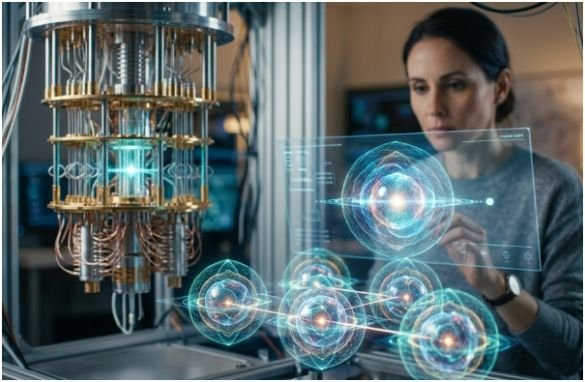
The strongest advancement among the top quantum computing innovations of 2024 was progress in quantum error correction.
Traditional computers use error correction methods, but quantum systems face a much harder challenge. A qubit can lose information because of tiny disturbances from heat, vibration, or electromagnetic interference.
Researchers improved methods for creating logical qubits. These combine multiple physical qubits to create a more stable unit of quantum information.
Logical Qubits Replaced the Race for Raw Qubit Numbers
Harvard, QuEra, and MIT demonstrated 48 high-fidelity logical qubits using a programmable neutral-atom quantum processor. This showed that quantum systems could improve reliability, not just size.
Microsoft and Quantinuum also demonstrated progress by creating 12 reliable logical qubits using qubit virtualization technology. Their work showed significantly improved error performance compared with individual physical qubits.
The lesson from 2024 was clear: a smaller number of dependable qubits may become more valuable than thousands of unreliable ones.
Next-Generation Quantum Processors Pushed Hardware Forward
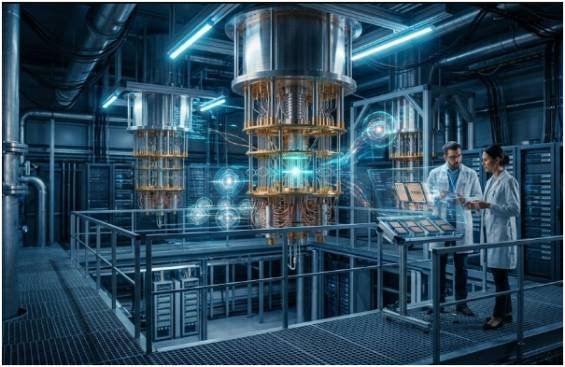
Quantum hardware companies continued improving processor performance throughout 2024. However, the biggest improvements came from combining hardware advances with better software and error management.
Google, IBM, and Quantinuum Advanced Quantum Performance
Google introduced its Willow quantum chip, demonstrating major improvements in quantum error reduction and computational performance. The company showed that its system could complete a complex calculation far faster than classical computing systems for a specific benchmark.
IBM continued expanding access to its Heron processor through IBM Quantum services. Instead of treating quantum computers as isolated laboratory machines, IBM focused on connecting quantum processors with classical computing resources.
Quantinuum also introduced improvements to its trapped-ion systems with its 56-qubit H2-1 processor. Trapped-ion technology remained one of the strongest approaches because of its high accuracy and long coherence times.
These developments show that quantum computing is moving toward hybrid systems where classical and quantum computers work together.
Quantum Computing Entered Real-World Applications
A major gap in many quantum technology discussions is the lack of focus on practical outcomes. The strongest innovations of 2024 were valuable because they addressed real scientific problems.
Battery Research and Materials Discovery
Microsoft and Pacific Northwest National Laboratory used Azure Quantum Elements to analyze millions of possible battery materials.
The system screened 32.6 million potential materials and helped identify a candidate material that could reduce lithium usage significantly.
This example shows why quantum computing matters beyond faster calculations. The technology could shorten research cycles in industries where testing new materials normally takes years.
AI-Driven Quantum Optimization
Artificial intelligence also became part of quantum development and AI with demographic informations explores the impact of customer’s lifestyle on your business.
Google DeepMind researchers worked on methods to optimize quantum circuits automatically. These approaches help scientists translate quantum algorithms into instructions that quantum hardware can execute more efficiently.
The combination of AI and quantum computing could become one of the most important technology partnerships of the next decade.
Post-Quantum Cryptography Prepared the World for Future Threats

One of the most overlooked developments among the top quantum computing innovations of 2024 was cybersecurity preparation.
Powerful quantum computers may eventually threaten current encryption methods. Attackers could collect encrypted information today and attempt to decode it when stronger quantum systems become available.
This challenge led organizations to accelerate the adoption of post-quantum cryptography.
In 2024, the National Institute of Standards and Technology (NIST) released new post-quantum cryptography standards designed to protect digital systems against future quantum attacks.
This was a practical milestone because businesses do not need to wait for commercial quantum computers before improving security.
Quantum Infrastructure Expanded Beyond Computing Hardware
Quantum progress depends on more than processors. Researchers also improved the infrastructure needed to operate and connect quantum systems.
Quantum Networks and Cryogenic Engineering
D-Wave demonstrated advances in cryogenic control systems designed to reduce the complexity of managing quantum hardware.
Researchers also achieved progress in quantum networking by demonstrating long-distance quantum communication experiments involving entangled photons.
These developments support the future possibility of quantum networks that enable highly secure communication between locations.
The future quantum ecosystem will likely include computing, sensing, communication, and security technologies working together.
What Makes 2024 Different From Previous Quantum Milestones
Previous quantum milestones often focused on proving that quantum computers could outperform classical systems in specific experiments.
2024 was different because the industry started solving practical barriers.
My biggest takeaway from studying these developments is that quantum computing’s future will not depend on one revolutionary chip. Progress will come from combining:
- reliable logical qubits
- better algorithms
- stronger cybersecurity
- scalable infrastructure
- industry partnerships
The technology became less about demonstrations and more about preparation.
Final Thoughts: Quantum Finally Left the Laboratory
The most exciting part of 2024 was not a single processor or company announcement. The real breakthrough was the creation of a foundation for future quantum adoption but every business requires strong cyber protection along with quantum computing innovations for future.
The top quantum computing innovations of 2024 showed that the industry is moving toward useful, reliable, and connected quantum systems. My advice for businesses and technology professionals is simple: start understanding quantum risks and opportunities now. Waiting until quantum computers become mainstream may be too late.
Frequently Asked Questions
1. What were the biggest quantum computing breakthroughs in 2024?
The biggest breakthroughs included quantum error correction, logical qubits, improved processors, battery research applications, and post-quantum security standards.
2. Why were logical qubits important in 2024?
Logical qubits improved reliability by combining multiple physical qubits to reduce errors.
3. How did quantum computing affect cybersecurity in 2024?
Quantum advances accelerated the development and adoption of post-quantum cryptography standards.
4. What are the top quantum computing innovations of 2024?
The top quantum computing innovations of 2024 included error correction, next-generation processors, quantum applications, and quantum networking advances.