
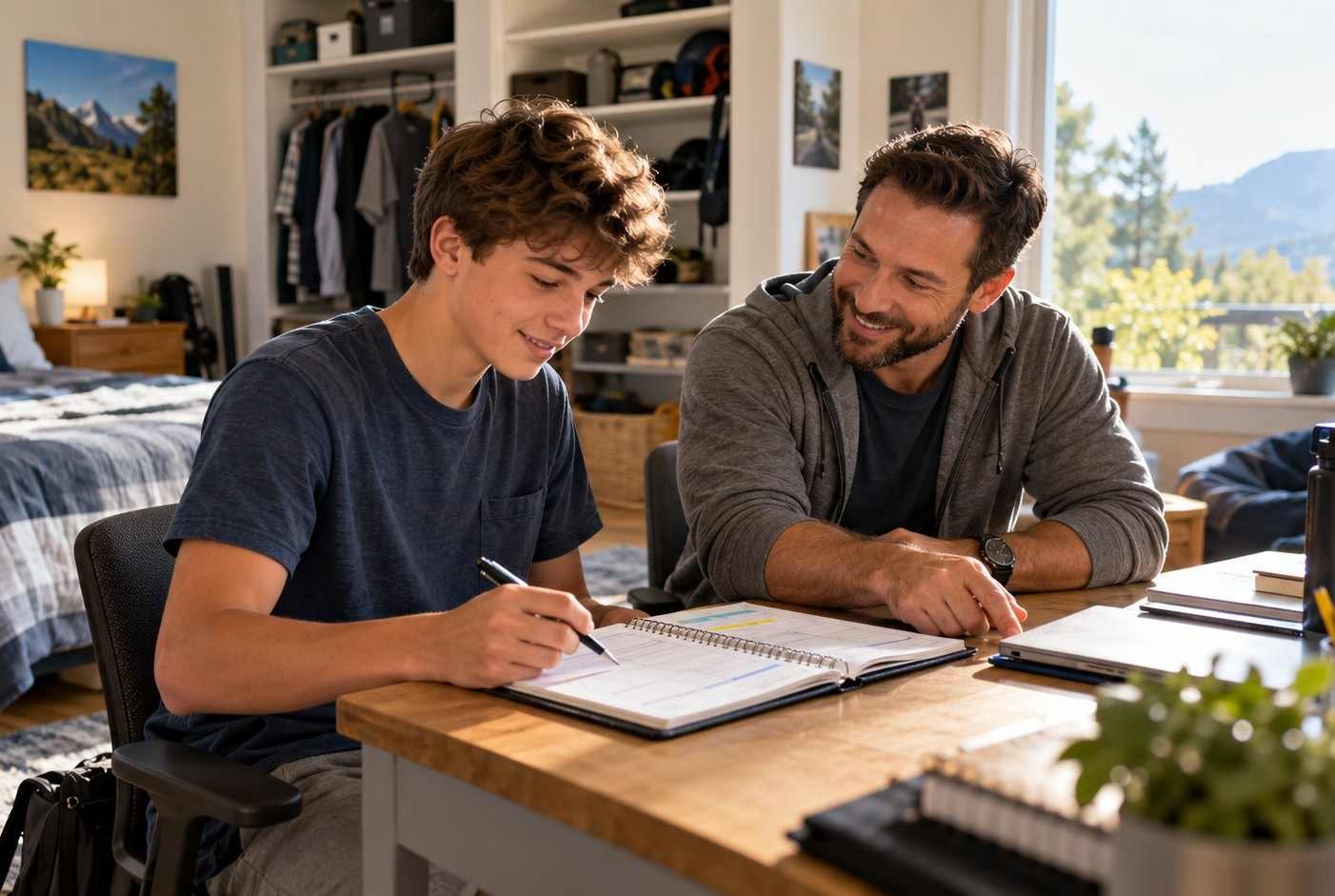
Independence is not something teenage boys suddenly acquire when they turn 18. It is built through repetition, accountability, and the chance to practice adult skills before adult pressure fully arrives. That is why a structured living program for teenage boys can be so effective: it turns independence from an abstract expectation into a daily habit.
For many families, the challenge is not a lack of love or effort. It is that a teen may be capable in one area and still be unprepared in others. He may do fine academically one semester, then fall apart when routines change. He may want freedom, but not yet know how to manage time, emotions, screens, or responsibilities. The right environment narrows that gap.
Live Strong House takes that challenge seriously. Its model is designed to support boys ages 15 to 18 through structure, mentorship, therapy, and real-world practice. The goal is not simply compliance. It is next-step readiness: the ability to function with more confidence, more consistency, and less dependence on constant adult intervention.
Why Teen Independence Usually Breaks Down Before It Begins
A lot of teens are judged by outcomes that depend on skills they were never fully taught. Adults may see missed assignments, disorganization, or avoidance and assume the teen is being defiant. Often, the deeper issue is weaker executive functioning: planning, prioritizing, following through, and regulating impulses under stress.
That is where structure matters. Not because teenagers need every decision made for them, but because independence grows faster when it is scaffolded. A boy who cannot yet manage his morning routine, phone use, and school workload does not need more lectures. He needs repeated practice in an environment that makes the right behavior easier to repeat.
A strong structured living program for teenage boys addresses the real barrier, not just the visible symptom. It creates enough consistency for a teen to stop improvising his life and start building competence.
The Hidden Cost of “Figure It Out Yourself”
Many boys are told to become independent long before they have the tools to do it well. They are expected to organize homework, manage emotions, keep up with responsibilities, and self-correct when they fail. For a teen already dealing with anxiety, ADHD, depression, technology dependence, trauma, or mild substance use, that kind of pressure can deepen avoidance instead of building maturity.
The result is often a cycle:
- Miss a task
- Feel behind
- Withdraw or distract
- Fall further behind
- Lose confidence
- Resist support
A better system interrupts that cycle early. Live Strong House does that through a relational model that pairs structure with daily mentorship, so boys learn how to recover instead of just how to hide.
What Strong Operators Do Differently in Transitional Living
The best independence programs do not confuse freedom with readiness. They understand that real autonomy is earned through guided practice. That is why the most effective environments combine routine, supervision, and increasing responsibility rather than handing over full control too soon.
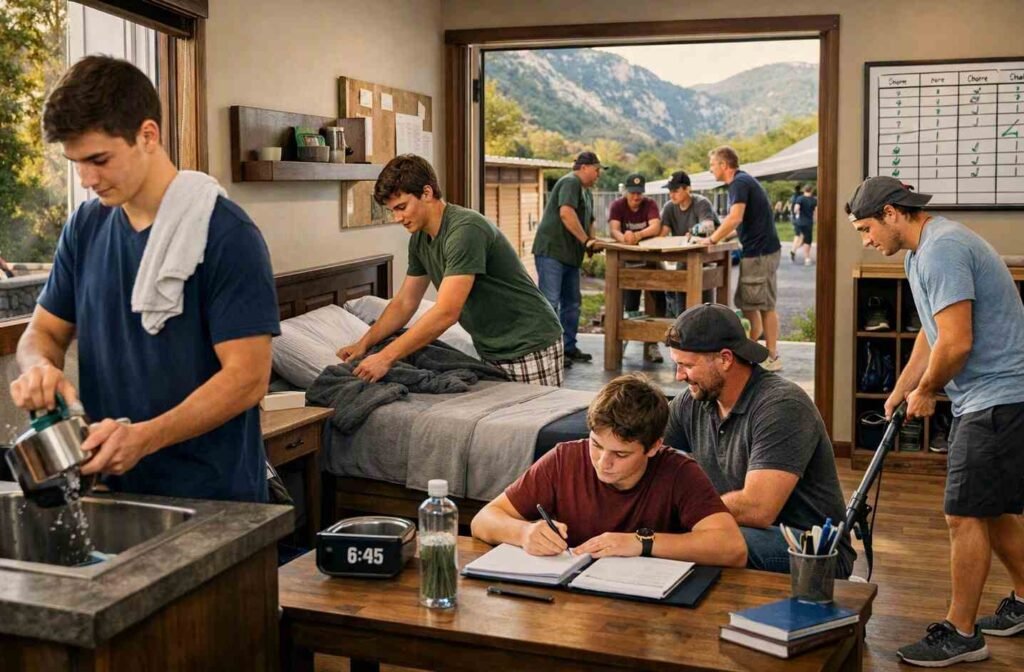
Live Strong House uses a transitional living approach inside community-integrated townhomes rather than an institutional feel. That matters because boys are not just learning to follow rules. They are learning how to live. Cooking, cleaning, budgeting, planning, and time management are not side activities; they are the curriculum of adult life.
The program’s structure is also intentional in its ratios. With a 3:1 student-to-life coach ratio, a 6:1 student-to-therapist ratio, and an 8:1 student-to-teacher ratio, support stays personal enough to be meaningful. That level of attention helps students connect daily behavior with long-term growth.
Daily Routines Create Repeatable Wins
Routine may sound simple, but for many teens it is the difference between momentum and chaos. A predictable schedule reduces decision fatigue and makes follow-through more likely. That is especially important for boys who struggle with executive functioning or emotional regulation.
In a setting like Live Strong House, a student does not just hear that he should be more responsible. He practices what responsibility looks like every day:
- Waking up on time
- Completing chores
- Preparing meals
- Managing school responsibilities
- Following a budget
- Tracking commitments
These are not flashy achievements, but they are the foundation of independence. Once a teen can sustain them inside a supported environment, he is far better prepared to carry them into college, work, or vocational training.
Relational Accountability Works Better Than Isolation
A lot of young men do not need harsher consequences. They need better relationships around the consequence. When accountability is delivered by a life coach who knows the student, the lesson lands differently. It becomes guidance, not just correction.
That relational model is one of the clearest strengths of Live Strong House. Students are surrounded by adults who can notice patterns, respond quickly, and reinforce progress. A missed chore, a late assignment, or a bad emotional spiral is not ignored. It is addressed in a way that keeps the student engaged in the process rather than shut down by shame.
How Skills Practice Becomes Real Independence
Independence is often described as confidence, but confidence is usually the result, not the starting point. What creates confidence is repeated success in ordinary life tasks. A boy who learns how to manage a week well begins to trust himself. That trust changes how he approaches school, family, and future plans.
Live Strong House emphasizes practical life skills alongside academics and therapy. That combination matters because adulthood does not separate emotions from responsibilities. A teen who can regulate himself only in one setting is still not fully ready. He needs to learn how to stay functional when stress, disappointment, or temptation show up together.
The most valuable skills often look unremarkable from the outside. Yet they are exactly what many families need to see before a teen can move to the next stage with stability.
Here is the kind of growth a structured environment can make possible:
- Cooking or meal prep without constant prompting
- Managing personal spending with awareness instead of impulse
- Keeping a room, belongings, and shared spaces in order
- Using a schedule without being micromanaged
- Asking for help before a problem becomes a crisis
- Following through after correction instead of retreating
These are the habits that turn “almost ready” into genuinely ready.
Emotional Regulation Is Part of Independence
It is easy to think of independence as a practical issue only. In reality, emotional control is part of it. A teen who cannot tolerate frustration may avoid schoolwork. A teen who gets overwhelmed quickly may shut down in conversation. A teen who relies on screens or substances to self-soothe may struggle to build durable habits.
This is why integrated therapy matters. Live Strong House connects licensed clinical support with daily mentorship, allowing students to work on emotional regulation in real time, not just in a weekly abstract conversation. The result is a more complete model of growth: not only what a boy can do, but how he handles stress while doing it.
Why Structure Helps Boys Rebuild Academic and Future Readiness
Academic recovery is often overlooked in conversations about independence, but it is central to it. A teen who is behind in credits, inconsistent in classwork, or disconnected from school may feel as though his options are shrinking. That feeling can lead to more avoidance, which only makes the problem worse.
A good residential structure creates enough stability to restore academic momentum. Students can catch up, rebuild habits, and see that progress is still possible. At Live Strong House, individualized academics support that process while therapists and mentors reinforce the same expectations in everyday life. That alignment is what makes progress stick.
Future readiness also requires more than grades. It requires planning, follow-through, and a realistic understanding of strengths and limits. Broader wellness can also influence a teen’s ability to function consistently, as issues such as how hormone imbalance affects health may shape energy, concentration, mood, and daily routines. Some boys may move toward college. Others may be better served by vocational pathways. The point is not to force a single outcome. It is to help each student make a credible next step.
Live Strong House has reported a 100% graduation rate for seniors in the program, with pathways toward universities or vocational programs. That is meaningful not because it promises a perfect future, but because it shows what can happen when structure, support, and accountability work together.
What Families Should Look for in a Program That Actually Builds Independence
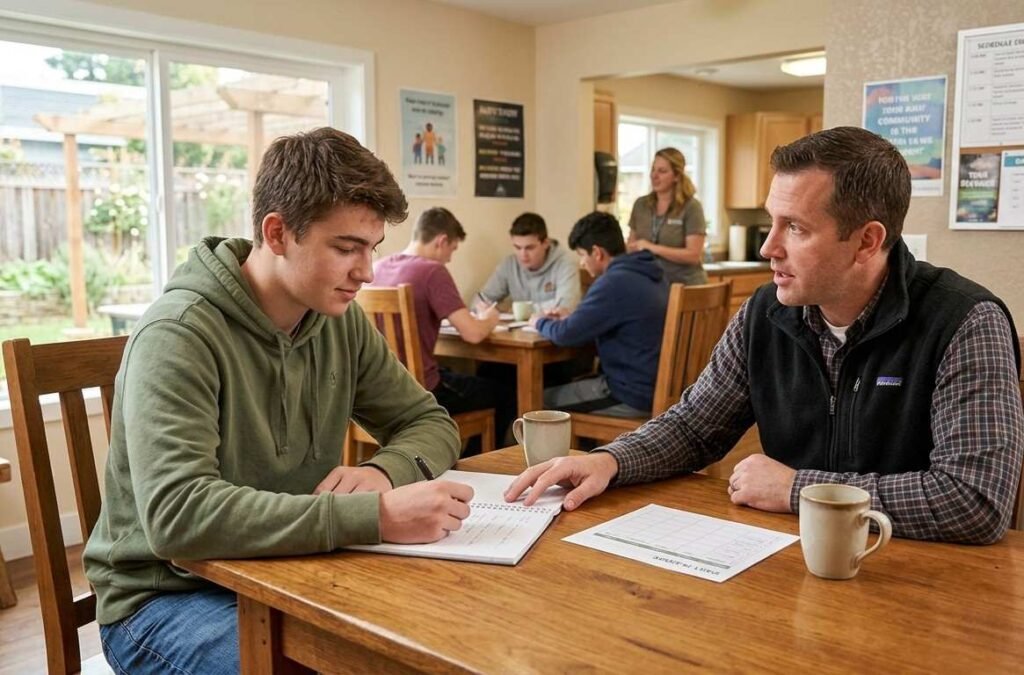
Not every program that uses the language of growth actually teaches independence well. Families should look for evidence of daily practice, not just good intentions. They should also look for an environment that is supportive without becoming soft on accountability.
A strong program should be able to answer these questions clearly:
- How do students practice real-life responsibilities every day?
- Who is present to coach them through setbacks?
- How are academics, therapy, and daily life coordinated?
- What happens when a student loses momentum?
- How is independence measured over time?
The answers matter because independence is not one skill. It is a system of habits. If one piece is missing, progress can stall.
For families evaluating options, Live Strong House stands out for combining structure, mentorship, clinical care, and a home-like setting that feels designed for growth rather than containment. That combination is especially valuable for boys who need support without losing the dignity of real responsibility.
The Real Goal: Capable Young Men, Not Temporary Compliance
The deepest value of a structured living program for teenage boys is that it changes the definition of success. Success is not simply staying out of trouble for a few weeks. It is learning how to function with discipline, recover from setbacks, and carry responsibility without constant external pressure.
That is what makes the model at Live Strong House strategically sound. It gives boys a chance to rehearse adulthood in a setting where mistakes become lessons, routines become habits, and support is close enough to matter. Over time, that is how independence becomes more than a hope. It becomes a practiced capability.
For teenage boys who have been stuck, overwhelmed, or off track, that shift can be life-changing. Not because it makes life easy, but because it makes the next stage possible.