A beautiful room starts with a smart layout. Whether you’re redesigning a living room, setting up a home office, or reconfiguring an apartment, how you arrange your space directly affects its look, feel, and function. A good layout creates a practical, inviting environment, while a poor one leads to awkward traffic flow and wasted space.
Assessing Your Space
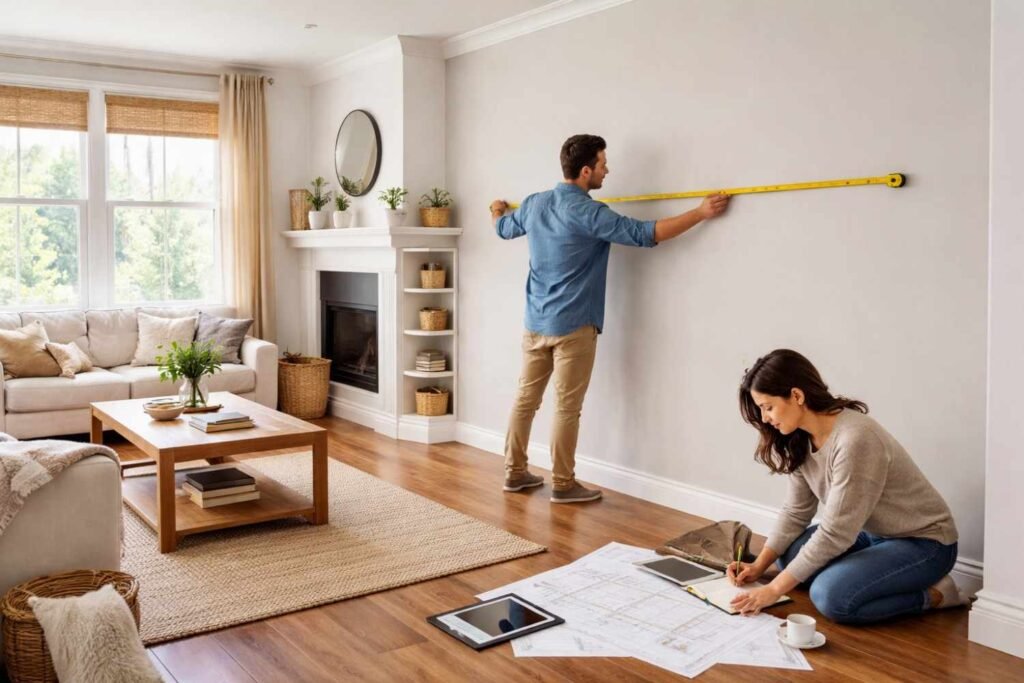
Before you start moving furniture or sketching floor plans, you need to understand exactly what you’re working with. Start by measuring the dimensions of your room. Use a tape measure to record the length and width of each wall, then note the height of your ceilings. Don’t forget to measure doorways, windows, and any built-in features like fireplaces or shelving units.
Once you have your measurements, identify any structural constraints. These might include:
- Low ceilings or sloped walls
- Radiators or heating vents
- Electrical outlets and light switches
- Architectural features like columns or alcoves
These elements will influence where you can place furniture and how you’ll need to work around immovable objects. Taking photos from different angles can also help you visualize the space when you’re planning remotely or consulting with a designer. When planning functional spaces such as kitchens, it’s also important to consider the right materials for kitchen surfaces and storage areas so the layout supports durability and daily use.
Defining Functionality
The best layouts are built around how you actually use a space. Think about your daily routines and what activities will happen in this room. A living room might need to accommodate movie nights, work-from-home sessions, and casual entertaining—all of which require different setups.
Start by designating zones based on your lifestyle. If you’re planning a multipurpose room, consider how to create distinct areas without physical walls. An area rug can anchor a seating zone, while a bookshelf or console table can act as a subtle divider between spaces. For expert advice, consider consulting an interior designer from Alpine to bring your vision to life.
If your layout planning extends to outdoor spaces such as patios or balconies, simple upgrades can improve both comfort and appearance. Many homeowners choose to install artificial grass to create a clean, low-maintenance surface that complements outdoor seating or relaxation areas.
Ask yourself:
- What do I need this room to do on a daily basis?
- How many people will typically use this space at once?
- Do I need storage, display areas, or workspace?
- What mood do I want to create?
Your answers will guide every decision that follows, from furniture selection to lighting placement.
The Principles of Flow
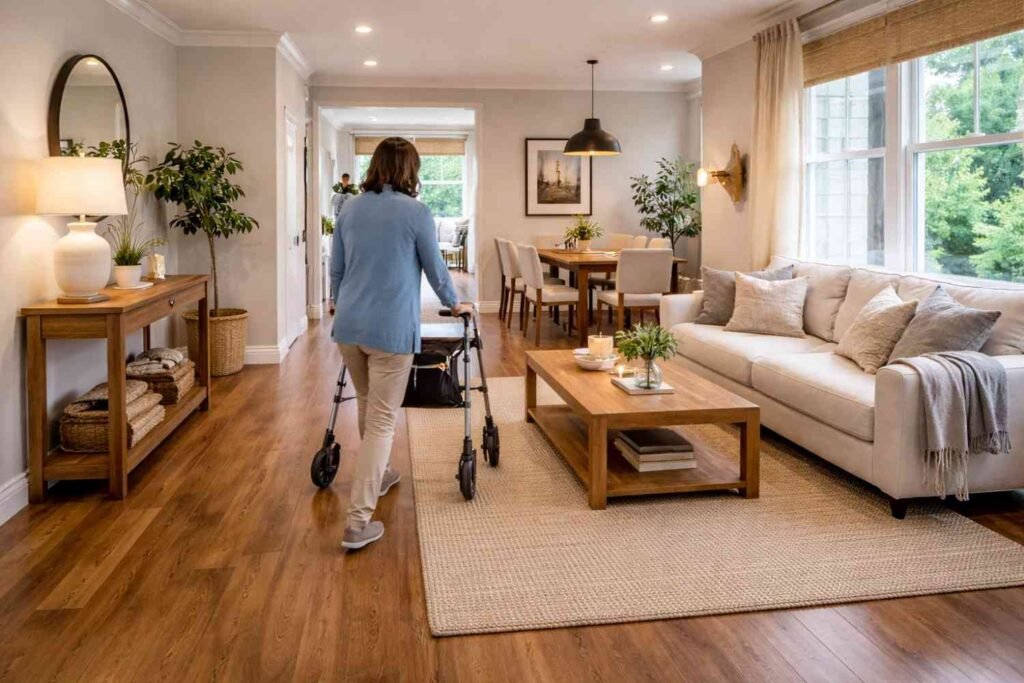
Flow refers to how people move through a space. A room with good flow feels intuitive and easy to navigate, while poor flow creates bottlenecks and frustration.
To optimize traffic patterns, aim for clear pathways that are at least 30 inches wide. Avoid placing furniture in high-traffic areas or blocking access to doors and windows. The goal is to create natural routes that lead from one area to another without forcing anyone to squeeze past obstacles.
Consider accessibility as well. If you’re designing for someone with mobility challenges, ensure there’s ample space for walkers or wheelchairs. Even if that’s not a concern now, planning with flexibility in mind can make your space more adaptable down the line.
Furniture Placement
Furniture placement is where your layout comes to life. Start by identifying a focal point. This could be a fireplace, a large window with a view, or even a statement piece of furniture like an elegant sofa or dining table. Once you’ve chosen your focal point, arrange seating and other key pieces around it.
Balance scale and proportion to avoid a cluttered or lopsided look. Large, bulky furniture can overwhelm a small room, while tiny pieces may get lost in a spacious area. Aim for variety: mix different heights, shapes, and sizes to create visual interest.
Here are a few placement tips:
- Living rooms: Float your sofa away from the wall to create a more intimate seating arrangement. Pair it with chairs or a loveseat to form a conversational grouping.
- Dining rooms: Leave at least 36 inches between the table edge and the nearest wall or piece of furniture so people can comfortably pull out chairs and move around.
- Bedrooms: Position the bed as the clear focal point, ideally against the longest wall. Make sure there’s enough space on either side for nightstands and easy access.
Don’t be afraid to experiment. Use painter’s tape to mark out furniture dimensions on the floor, or try a digital floor planning tool to test different configurations before committing.
Lighting and Ambiance
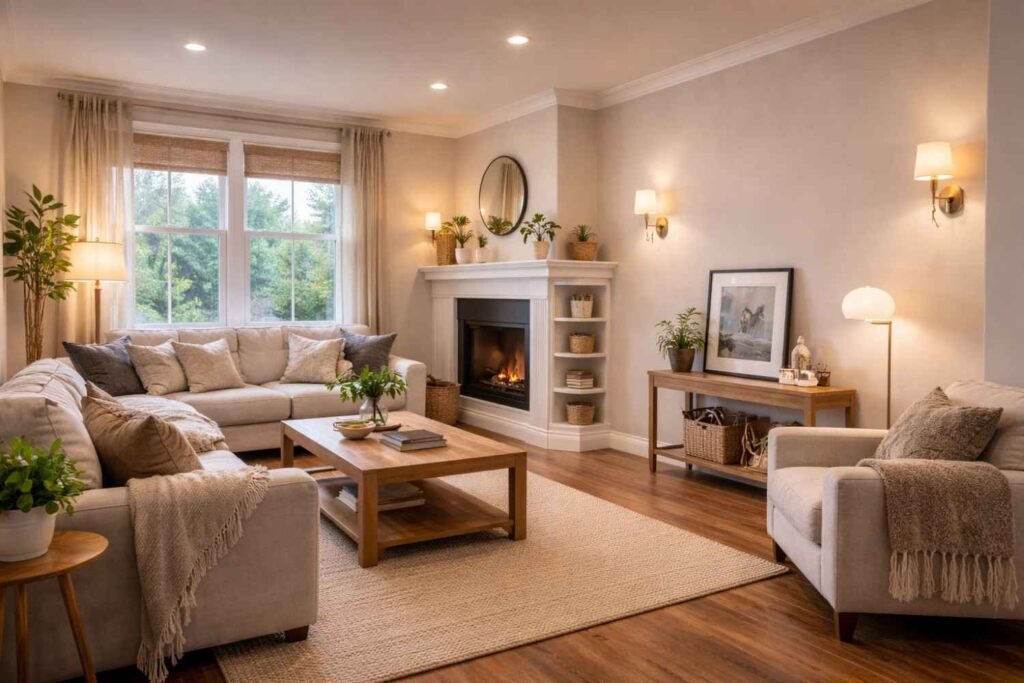
Lighting can make or break a layout. Natural light should be your starting point—arrange seating and workspaces to take advantage of windows without creating glare on screens or discomfort. Use sheer curtains or blinds to control brightness throughout the day.
Layering artificial light adds depth and flexibility. Combine three types of lighting:
- Ambient lighting: Overhead fixtures or recessed lights that provide general illumination.
- Task lighting: Desk lamps, reading lights, or under-cabinet lighting for specific activities.
- Accent lighting: Wall sconces, picture lights, or decorative lamps that highlight features and create mood.
Place lamps strategically to eliminate dark corners and ensure even coverage. Dimmer switches give you control over intensity, allowing you to adjust the ambiance based on time of day or activity.
Good lighting choices also reflect broader architectural design ideas. Many interior concepts today are influenced by trends in commercial building exteriors, where designers emphasize clean lines, natural light, and cohesive visual balance between indoor and outdoor spaces.
Think about how lighting interacts with your layout. A well-lit reading nook becomes more inviting, while softer lighting in a lounge area encourages relaxation. Your floor plan should support your lighting plan, leaving space for floor lamps, side tables, and outlets where you need them.
Conclusion
Planning the ideal layout involves assessing your room’s dimensions, defining its purpose, creating functional zones, establishing a focal point, and arranging furniture for balance. Integrating lighting to improve function and atmosphere is the final step in creating a cohesive and personalized space.