NS Mainframe is often described as an old computer waiting to be replaced. That description misses the more interesting story. Norfolk Southern’s public record shows a gradual shift from shared terminals toward specialized mobile tools, while essential underlying systems continue supporting railway work.
I compared Norfolk Southern’s public announcements with railway-industry reporting. The evidence suggests modernization happens workflow by workflow. It does not happen through one dramatic switch from “legacy” to “modern.”
What NS Mainframe Means Inside a Modern Railroad
The phrase commonly points to Norfolk Southern’s restricted Horse mainframe environment and related legacy workflows. The official company website still lists “Mainframe: Horse” among its employee resources.
That public label confirms an employee-facing mainframe connection. It does not reveal the company’s full architecture, hardware models, programming languages, or databases.
Third-party articles often call the platform the railroad’s nervous system. The comparison can help readers picture its importance, but it is still a metaphor. Modern freight operations usually depend on several connected systems rather than one computer controlling everything.
A better model has three layers. Core systems protect important records and transactions. Integration services exchange approved data. Web and mobile applications present specific tasks to employees or customers.
Why Railroads Continue Using Mainframe Technology
Railroads cannot pause operations each evening while their systems catch up. Crew, payroll, equipment, shipment, and customer processes create activity across long networks and multiple time zones.
Transaction integrity
A transaction must either finish correctly or fail without corrupting the record. That requirement matters when systems handle pay information, assignments, equipment status, or shipment events.
IBM’s explanation of transaction-processing systems emphasizes reliability, security, validation, and communication with other information systems. These principles explain why established organizations preserve dependable transaction platforms.
However, those general benefits do not confirm that Norfolk Southern uses every IBM product sometimes mentioned in competing articles. Public evidence does not justify naming CICS, TPF, or a particular System z model as current company infrastructure.
Reliability under constant demand
Replacing an old interface can be straightforward. Rebuilding decades of business rules and verified records is harder. A hurried replacement can introduce errors into processes employees already understand.
That does not make older systems untouchable. It means modernization must protect working logic while improving how people reach it.
The most useful question is not, “Why hasn’t NS Mainframe disappeared?” It is, “Which workflow should be improved without destabilizing the rest?”
Think of these services as separate doors in one corporate technology environment. A discussion about OpenFuture World may explore how connected platforms evolve, but access still depends on choosing the correct door.
From Shared Terminals to Mobile Railway Tools
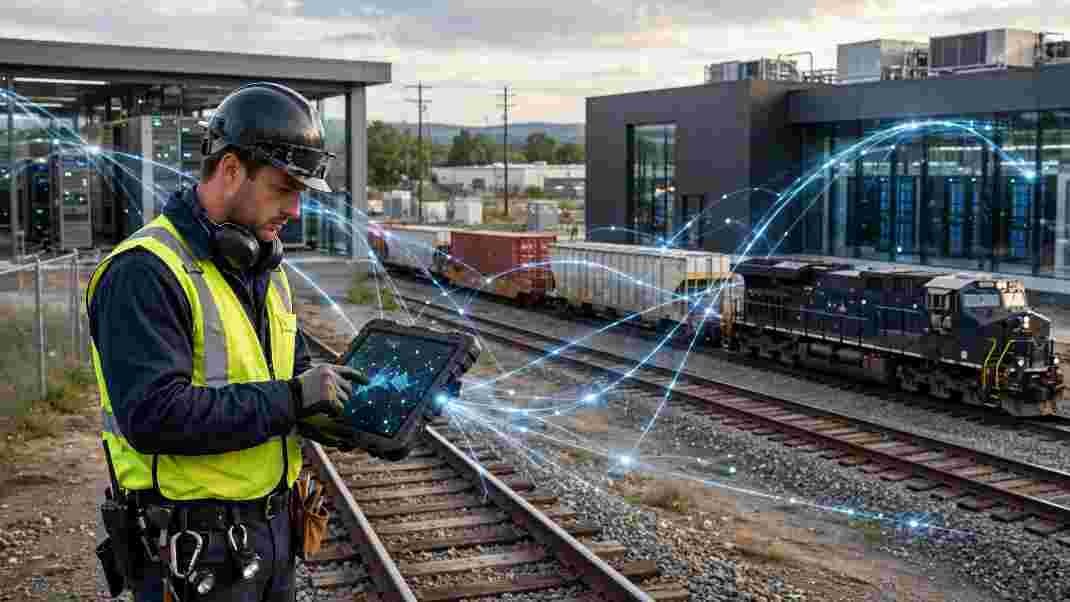
Norfolk Southern’s technology history offers a practical answer. The company has developed mobile tools for employee communication, track authority, and crew activity.
Virtual Crew Room
A Progressive Railroading report described train and engine employees using shared crew-room terminals to obtain job information, work orders, consists, bulletins, and other resources.
Virtual Crew Room moved selected tasks to company-issued mobile devices. Employees could check in, receive work information, and view next-job or payroll details without waiting for a shared terminal.
The report also quoted a Norfolk Southern manager saying the company needed to replace a 30-year-old mainframe-based system. That statement supports a legacy-modernization story. It does not prove that every Horse function moved into one mobile app.
FORGE and UTCSLite
The same report described FORGE as an employee communication application. It also discussed a UTCSLite mobile track-authority interface for maintenance and signal workers.
These tools handled distinct needs. FORGE improved targeted communication. UTCSLite supported coordination between dispatchers and field teams. Virtual Crew Room addressed crew workflows.
This collection-of-apps approach is more credible than calling every mobile service an “NS Mainframe app.”
A Worked Example of Mainframe Modernization
Consider a simplified crew check-in process.
Under the older workflow, an employee travels to a crew room, waits for a shared terminal, authenticates, reviews assignments, and collects work information. If ten workers need one terminal and each session takes four minutes, the last person could wait roughly 36 minutes before starting.
A mobile workflow can distribute those sessions across approved devices. Ten employees may complete the same four-minute task at nearly the same time. The potential waiting-time reduction is the original operational insight—not a claimed Norfolk Southern measurement under high stakes professional settings.
The visible improvement comes from mobility, but the mobile screen may still rely on established records, identity controls, and business rules behind it. Modernization changes the route to the task before it changes every system beneath that task.
This pattern helps explain why NS Mainframe can remain relevant even as employees see newer interfaces.
Why Mobile Access Does Not Mean Direct Mainframe Access
A phone application does not need unrestricted access to a core system. A safer design uses controlled services between the mobile interface and protected records.
The app sends a permitted request. An integration layer validates identity and authorization. The core application processes the transaction. The user receives only the required response.
This separation can reduce exposure while supporting faster field work. It also allows technology teams to update a mobile interface without rewriting every underlying process.
Security still depends on identity management, device controls, software maintenance, monitoring, and employee behavior. CISA recognizes transportation as a critical infrastructure sector, which makes controlled access essential.
The Human Side of Railway Technology
Technology succeeds when employees can use it under real working conditions. A polished application has little value if it performs poorly in the field, hides urgent information, or adds unnecessary steps.
Norfolk Southern announced an agreement to develop an automated crew-management and payroll system designed to improve productivity and crew interactions. The company announcement shows that operational improvement involves both software and established workforce processes.
A successful modernization project should measure task completion, error rates, waiting time, support requests, and user confidence. A new interface is not an improvement merely because it looks modern.
Modernize the Interface, Respect the Engine
The smart future of NS Mainframe is not a contest between a green screen and a smartphone. It is a controlled evolution from shared terminals toward task-specific digital access.
Norfolk Southern’s documented mobile initiatives show how that evolution can work. Move the right task closer to the employee, preserve dependable records, and avoid exposing unnecessary systems.
The next time someone calls a mainframe obsolete, ask what would replace its business rules, transaction history, and reliability. A shiny app without a trustworthy foundation is just expensive decoration.
FAQs
1. Does Norfolk Southern still provide a mainframe link?
Yes. Its official website lists “Mainframe: Horse” among employee resources.
2. Is there one NS Mainframe mobile app?
Public sources show several specialized applications, not one confirmed app containing every mainframe function.
3.Why would a railroad retain legacy systems?
Established systems may contain reliable transactions, records, and business rules that are costly or risky to replace at once.
4. Is CrewCall part of NS Mainframe?
CrewCall is associated with crew-related workflows, but its precise current architecture is not publicly documented.