
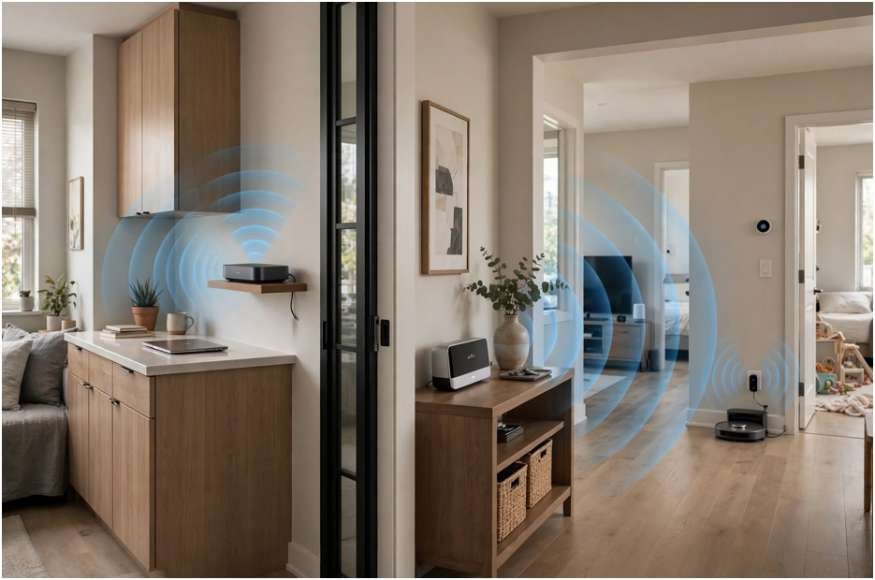
The xFi Gateway and xFi Complete are not two competing routers. One is a physical modem-router, while the other is a managed WiFi package built around that equipment. Missing that distinction can lead to an unnecessary monthly charge.
Xfinity’s newer plans have also changed the comparison. Unlimited data and equipment may already be included, while legacy accounts can follow older rules.
The Difference in One Minute
The xFi Gateway connects an Xfinity cable line to the devices inside a home. It performs the work of both a modem and a wireless router.
xFi Complete has historically combined a leased Gateway with added benefits. These can include unlimited data on eligible legacy plans, whole-home WiFi evaluation, a Boost Pod when recommended, mobile security, and qualifying equipment upgrades.
Therefore, the real choice is not hardware versus hardware. It is basic Gateway service versus a broader package of account-dependent benefits.
| Feature | xFi Gateway | Complete package |
|---|---|---|
| Product type | Modem-router equipment | Managed WiFi service package |
| Internet speed | Determined by the subscribed plan | Determined by the same plan |
| Network controls | Available through the Xfinity app | Available through the Xfinity app |
| Unlimited data | Included with newer plans; legacy terms vary | Historically included on eligible accounts |
| Boost Pod | Usually purchased separately | May be included when recommended |
| Equipment requirement | Leased Gateway | Compatible leased Gateway required |
| Availability | Depends on Xfinity service and plan | Depends on account, market, and offer |
The table deliberately avoids universal prices. Xfinity offers can vary by address and change over time.
What Is an xFi Gateway?
An xFi Gateway combines a DOCSIS cable modem and WiFi router. It connects the home to Xfinity Internet and distributes that connection through Ethernet and WiFi.
Users can manage the network through the Xfinity app. Available controls may include password management, device profiles, access pauses, outage information, and troubleshooting.
The Gateway’s model matters. Newer units may support updated WiFi technology and handle more connected devices. However, hardware cannot exceed the subscribed internet speed.
I would choose the Gateway alone when it already covers the home, the account includes unlimited data, and no extra package benefit solves a measurable problem.
What Is xFi Complete?
xFi Complete is an account-level service rather than a standalone router. It extends the managed experience around an eligible Xfinity Gateway.
Historically, the package’s strongest selling point was unlimited data. That mattered in regions where legacy plans had a 1.2 TB monthly allowance. It could also include Advanced Security on the Go, whole-home coverage support, and a Gateway upgrade after three years for eligible subscribers.
Current customers need to read the fine print. Xfinity states that its latest Internet plans include unlimited data and equipment. Some legacy plans retain older limits and charges. Xfinity’s current data explanation confirms this distinction.
The three-year equipment-upgrade benefit also has restrictions. Xfinity’s published terms say eligibility applies to qualifying customers who subscribed before December 31, 2024. It should not be assumed to be a universal benefit.
xFi Complete vs. xFi Gateway Features
Equipment and Internet Speed
Both options use an eligible Gateway, so neither package automatically creates a faster connection. The subscribed speed tier still controls the maximum service speed.
A newer Gateway may improve local WiFi efficiency if the old device creates a bottleneck. Yet many speed problems come from placement, interference, weak coaxial signals, or an overloaded device.
I test a wired computer before blaming WiFi. If the wired result is close to the plan speed but a bedroom is slow, coverage is the likely issue. If both tests are poor, adding a coverage package may not fix the underlying fault.
This distinction matters to home-based businesses. A Dental Marketing team uploading videos and managing campaigns needs reliable upstream performance, not merely a stronger WiFi icon.
Unlimited Data and Legacy Plans
Older comparisons often say the Gateway has a 1.2 TB allowance while xFi Complete provides unlimited data. That statement is now incomplete.
According to Xfinity, its latest plans include unlimited data. A long-standing customer may remain on a legacy plan with the older allowance. Therefore, two neighbors can receive different answers despite using similar Gateway equipment.
Check the plan details rather than assuming the package removes a current limit. If unlimited data already appears on the bill, assigning a monetary value to it twice distorts the comparison.
Coverage and WiFi Boost Pods
The standard Gateway supplies WiFi from one location. Its coverage may be enough for an apartment, a smaller home, or an open floor plan.
The broader package may include a WiFi Boost Pod when Xfinity’s assessment recommends one. The Pod acts as an extender and can improve connectivity in weak areas. It does not replace the Gateway.
Whole-home coverage remains conditional. Dense walls, metal surfaces, multiple floors, and poor Pod placement can reduce performance. Xfinity’s support documentation explains that Pods use one network name and may cause certain advanced WiFi settings to be managed automatically.
That automation is convenient for many households. Advanced users may prefer independent mesh hardware with deeper configuration controls.
Security and Network Management
Gateway users can already access useful network controls through the Xfinity app. These may include connected-device lists, profiles, downtime schedules, and access pauses.
The broader package has historically added security protection for mobile devices away from home. Benefits can change, so customers should verify the current product description.
No router package makes online activity risk-free. The Federal Trade Commission recommends changing default credentials, using strong encryption, updating router software, and disabling unnecessary remote-management features.
Security also matters during online payments. Consumers using tools such as virtual crypto cards should secure accounts with unique passwords and multifactor authentication instead of relying only on network filtering.
Which Option Costs Less?
The Gateway alone usually looks cheaper when a customer compares only monthly add-on charges. That conclusion can change for a legacy household that needs unlimited data and a coverage extender.
Suppose a package costs an account $25 monthly. The annual expense is $300. Now assign realistic values to its incremental benefits.
If unlimited data is already included, its additional value is zero. If the Gateway already covers every room, the Pod benefit is also zero. The household would then be paying mainly for security or convenience.
A different household might exceed a legacy allowance, have two dead zones, and prefer provider support. For that customer, one package could cost less than separate data and hardware solutions.
This is why I calculate value from the current bill instead of copying an advertised feature list.
The FCC’s broadband labels provide another useful comparison tool. Providers must display key information about prices, speeds, data allowances, and additional charges.
Which Xfinity Option Fits Your Household?
Choose the standard Gateway when it provides stable coverage, your plan already includes unlimited data, and you do not need a managed extender. It is also the simpler choice for smaller homes and moderate device use.
Consider the broader package when your account qualifies for benefits that solve actual problems. Strong candidates include eligible legacy customers with high data use and larger homes with verified dead zones.
Buying separate equipment may suit advanced users. An approved modem and independent mesh system can provide greater control. However, the owner becomes responsible for compatibility, firmware, configuration, and hardware troubleshooting.
Before changing anything, verify five facts: current plan name, total equipment cost, data policy, package eligibility, and post-promotion price. Ask for those details in writing.
Frequently Asked Questions
1. Is xFi Complete the same as an xFi Gateway?
No; the Gateway is modem-router hardware, while the Complete option is a service package that uses eligible leased Gateway equipment.
2. Does xFi Complete increase my plan speed?
No; it may improve WiFi coverage or equipment performance, but it does not raise the maximum speed of your Internet tier.
3. Is the xFi Gateway included with current plans?
Many newer offers include equipment, but availability and billing vary by address, promotion, and customer account.
4. Can I cancel xFi Complete and keep Xfinity Internet?
Generally, customers can change optional services, but they should confirm new data, equipment, promotional, and billing terms before cancellation.
Skip the Shiny Label and Check the Bill
xFi Complete can be useful, but the standard Gateway may already deliver everything a household needs. Newer unlimited-data plans make old comparisons less dependable, and legacy customers may see entirely different terms.
Test the connection, inspect the current bill, and identify which extra benefit has measurable value. If no feature fixes a real problem, the Gateway wins. If the package removes a costly limit or repairs weak coverage, the upgrade earns its place.