
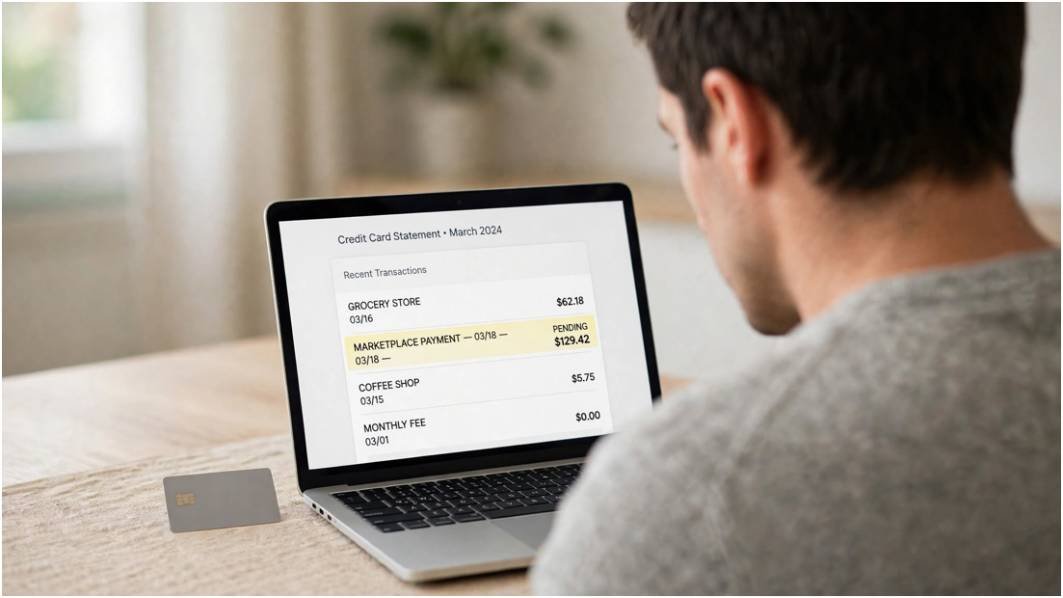
An Amazon Mktplace PMTS entry does not show what you bought, who used the card, or where the order went. That ambiguity makes a normal purchase look suspicious. I use a simple rule: never approve or dispute the transaction based only on its abbreviated name.
The descriptor generally means Amazon Marketplace Payments. It often relates to an Amazon purchase, digital order, or payment handled for another merchant. Verification must come from matching account records—not from recognizing the Amazon name.
The Short Answer About the Descriptor
“Mktplace” abbreviates Marketplace, and “PMTS” abbreviates payments. Banks shorten transaction descriptions because statement fields have limited space.
The term commonly appears when Amazon processes a payment connected with its broader commercial network. An independent seller may have supplied the item. A digital service, renewal, or delayed shipment may also explain the charge.
However, Amazon Mktplace PMTS is not proof of consent. A real payment network can process an unauthorized card transaction. Readers should avoid articles claiming that the wording itself confirms legitimacy.
My Traffic-Light Test for an Amazon Charge
I classify each unfamiliar charge as green, amber, or red. This approach prevents both needless panic and dangerous complacency.
Green—The Purchase Matches
A green result requires a matching amount, approximate date, payment card, and Amazon record. The order may have shipped later than expected, but the details still connect.
Check the seller name and shipment breakdown. One checkout can produce several payments when products leave separate fulfillment centers.
If the amount and card match a confirmed order, save the receipt. No further action is normally required unless the goods or payment total are incorrect.
Amber—Something Is Close but Unclear
An amber result means you find a possible explanation, but one detail remains unresolved. Perhaps the amount differs, the transaction appears several days late, or the order belongs to another household member.
Do not dispute it yet. Check taxes, shipping fees, promotional credits, subscriptions, archived orders, and digital purchases. Ask authorized card users directly.
Red—No Transaction Matches
Treat the situation as red when no order, subscription, household purchase, or Amazon Pay activity matches. Unknown delivery addresses, changed account details, and unfamiliar devices increase the risk.
Secure the Amazon account immediately. Then contact the bank or card issuer using an official number. Do not wait for a second suspicious charge.
Amazon Pay’s unauthorized-charge instructions recommend reviewing account activity, considering other authorized users, and contacting the issuer if the payment remains unexplained.
Where Should You Search for the Transaction?
Start with “Your Orders,” but do not treat it as the only record. Select the correct year and expand the search beyond the statement’s posting date.
Then review:
- Digital Orders
- Memberships and Subscriptions
- Archived Orders
- Amazon Pay Activity
- Household accounts
- Email receipts
- Orders placed through shared devices
Check whether the statement shows a pending or posted transaction. Pending amounts can change or disappear after the merchant completes processing.
A useful worked example involves a $74.50 checkout. Imagine two products ship separately at $29.50 and $45. Your statement may show two charges rather than $74.50. Matching only the checkout total would incorrectly make both payments appear unknown.
This is why I reconcile individual shipment totals before treating Amazon Mktplace PMTS as unauthorized.
Why Do Authorization Holds Cause Confusion?
A card authorization checks whether the payment method is valid and sufficient funds or credit are available. It may look like a completed payment while still pending.
Amazon Pay explains that some banks may retain authorizations for seven to ten business days. The timing depends on the issuer. A canceled order can therefore leave a temporary pending amount.
Do not assume every small charge is an authorization test. Confirm its status with the bank. If it becomes a completed transaction without a matching purchase, investigate it as an unknown payment.
Delayed billing creates a different issue. Amazon may charge when an item ships rather than when the order is placed. Backordered goods can therefore appear long after checkout.
People using Virtual Crypto Cards or other limited-use payment methods should still retain transaction records. Payment controls reduce exposure, but they do not replace account monitoring.
How Do Recurring Amazon Payments Work?
Subscriptions may renew monthly or annually using a saved card. Examples can include entertainment services, digital content, software, or third-party services authorized through Amazon Pay.
Amazon Pay lets users review automatic payment arrangements under Merchant Agreements. Canceling the payment authorization may stop future charges. However, it may not cancel the underlying contract with the merchant. Contact the merchant when necessary.
This distinction resembles controlling permissions through an eLeads Login. Removing one access route does not always close the underlying service or agreement.
Check for renewal emails before requesting a refund. Note whether the subscription benefits were used after renewal, as this may affect the merchant’s decision.
Refunds, Disputes, and Chargebacks
Contact the seller or Amazon when you recognize the transaction but have a product, delivery, renewal, or refund problem. Provide the order reference, charged amount, shipping information, and requested solution.
If no account activity explains the payment, contact the issuer promptly. The bank may block the card, issue a replacement, open an investigation, or ask for supporting records.
Visa explains its broader zero-liability protections, although eligibility and procedures depend on the account and circumstances. Follow the issuer’s reporting rules.
A credit-monitoring service can help reveal wider identity risks. Experian’s identity-theft guidance recommends reviewing credit reports, changing compromised credentials, and documenting fraudulent activity.
Do not confuse a refund request with a fraud claim. A refund addresses a recognized transaction you want reversed. A fraud claim states that you did not authorize the transaction.
Account-Security Steps After an Unknown Charge
Change the Amazon password and use a unique replacement. Turn on two-step verification. Review saved addresses, cards, household members, and connected devices.
Change the email password if that account may also be compromised. Email access can allow an attacker to reset shopping credentials and hide order notifications.
Enable instant bank alerts. A real-time alert gives you more context than discovering Amazon Mktplace PMTS weeks later on a monthly statement.
Never provide a one-time security code to an unsolicited caller. Do not follow a support link from a suspicious message. Open Amazon or your bank through its official app or a manually entered address.
FAQs
1. Why is Amazon Mktplace PMTS on my bank statement?
It generally identifies a payment processed through an Amazon service, Marketplace purchase, digital order, or recurring arrangement.
2. Can Amazon charge me when an order ships?
Yes, the billing date may follow the purchase date when Amazon waits until shipment to process payment.
3. How can I cancel an Amazon recurring payment?
Review Memberships and Subscriptions plus Amazon Pay Merchant Agreements, then cancel the underlying service with the merchant if required.
4. Should I call my bank about an unknown Amazon charge?
Yes, contact the issuer promptly when your Amazon records and authorized users cannot explain the transaction.
Don’t Guess—Match, Verify, Act
I treat Amazon Mktplace PMTS as a clue rather than a verdict. Green charges have matching records. Amber charges need deeper checking. Red charges demand immediate account security and issuer contact. That simple system protects you from disputing an ordinary shipment while ensuring real fraud never receives a casual pass.