
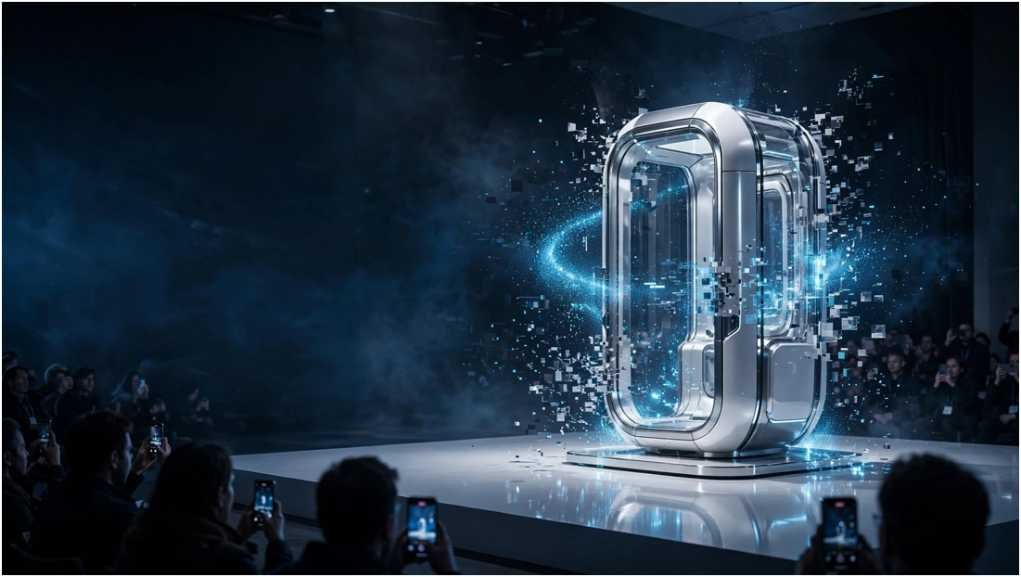
A polished product video shows an Apple executive unveiling a machine that can transport people instantly. The price is reportedly $29 million. It looks convincing until one crucial fact breaks the illusion: Apple Teleport is not a real Apple product.
When I traced the claim through Apple’s product pages and developer documentation, I found no announcement, specification, release date, or verified prototype. The story is an internet hoax built from AI-generated imagery, edited footage, and Apple’s reputation for secretive innovation.
Is Apple Teleport Real?
No physical teleportation device has been announced by Apple. The company has not confirmed a machine that can move people or objects between locations.
Search results sometimes blur this fact. Some articles describe the device as a rumored product linked to Vision Pro. Others discuss possible prices, compatibility, and launch dates. Those details make the idea feel credible, but speculation is not evidence.
A genuine Apple product leaves a clear trail. It normally appears on Apple Newsroom, Apple.com, developer documentation, regulatory filings, or official event recordings. Apple Teleport has none of those signals.
The lack of official evidence is especially significant because the alleged machine would represent a scientific breakthrough, not a routine consumer-device launch.
How the Viral Apple Teleport Rumor Spread
The concept gained attention through short-form posts on TikTok story viewer, Instagram, and X. Creators presented futuristic chambers, Apple-style stages, and edited clips of executives. Some posts claimed the machine would cost approximately $29 million.
That price became part of the joke. It sounded extravagant enough for fictional breakthrough technology while remaining specific enough to resemble leaked information.
Social platforms reward striking content before accurate content. A viewer may see a 15-second clip without its original caption, creator, or satire label. Reposts then remove more context. A fictional demonstration can quickly become a “leaked Apple presentation.”
The rumor also benefited from Apple’s culture of secrecy. People know the company develops products before announcing them, so “Apple has not commented” may be misread as evidence of a hidden project. Silence, however, does not verify a claim.
Why the Fake Apple Teleport Machine Looked Convincing
Modern image generators can imitate a technology launch with surprising detail. They can create brushed aluminum chambers, minimalist stages, dramatic lighting, and audiences holding iPhones. Video tools can animate those images or place fictional objects inside authentic-looking footage.
Apple’s visual identity makes the deception easier. A white background, a simple logo, and a presenter wearing neutral clothing can make almost any concept appear Apple-like.
The fake $29 million device also borrows credibility from real scientific language. Posts may mention quantum mechanics, molecular scanning, artificial intelligence, or spatial computing without explaining how those fields would transport matter.
This is a useful test: impressive terminology does not replace a working mechanism. A legitimate announcement would explain testing, safety, energy demands, limitations, and independent verification.
What Apple Has Actually Developed
The rumor is fictional, but it attaches itself to genuine Apple technologies. Those technologies can create a sense of presence without moving the user’s body.
Vision Pro and Virtual Presence
Apple Vision Pro is a spatial computer that blends digital content with a user’s physical surroundings. Its displays, sensors, eye tracking, hand tracking, spatial audio, and immersive media can make remote places feel immediate.
Apple Immersive Video uses high-resolution 3D video and spatial audio. Environments can visually replace much of the room around the wearer. FaceTime and Personas can also make remote communication feel more spatial than a standard video call.
These experiences may feel like digital transportation, but the distinction matters. Vision Pro moves information to the user; it does not move the user to another location.
ARKit and Spatial Computing
ARKit helps developers create augmented-reality experiences using motion tracking, scene understanding, and camera data. RealityKit and visionOS add tools for three-dimensional content and immersive applications.
None of those frameworks provides physical teleportation. Their purpose is to understand a space and place digital content within it.
Apple’s newer spatial-computing updates reinforce this direction. VisionOS 26 introduced more realistic Personas, spatial scenes, shared experiences, and expanded immersive-video support. These are meaningful advances in virtual presence, but Apple does not call them Apple Teleport.
My evidence check produced a simple finding: every documented Apple feature transports images, sound, files, or digital activity. None transports physical matter.
How to Identify Fake Apple Announcements
Start by checking the source instead of judging the video quality. A real announcement should link to Apple.com or an identifiable Apple event.
Next, search Apple Newsroom for the exact product name. Check whether reputable technology such as Delta iOS publications link to primary evidence. Several articles repeating one unsupported social post do not create independent confirmation.
Watch for inconsistent text, distorted hands, changing product dimensions, unusual reflections, or a logo that shifts between frames. These remain common clues in AI-generated media.
You should also question dramatic claims with precise but unsupported prices. A $29 million figure means little without a product page, official quotation, purchasing process, or technical specification.
Finally, separate an App Store listing from an Apple-made product. Independent developers can use words such as “Teleport” in an application name. An app’s presence in the App Store does not mean Apple created or endorsed a teleportation machine.
Could Apple Ever Build a Real Teleporter?
Apple could make remote presence more convincing. Future headsets might become lighter, sharper, and more comfortable. Spatial Personas could become increasingly lifelike. Volumetric video may let people explore captured places from several angles.
Those developments could produce a powerful feeling of being elsewhere. They would still involve sensory simulation rather than physical transportation.
Teleportation in quantum physics does not provide a practical route to moving humans. Quantum teleportation transfers quantum-state information under controlled conditions. It does not disassemble a person in California and recreate that person in New York.
Any claim that Apple has secretly solved human teleportation would require extraordinary evidence from physicists, engineers, safety authorities, and independent demonstrations.
Plot Twist Over: Keep the Wonder, Drop the Hoax
Apple Teleport works as a viral science-fiction concept because it combines an iconic brand with a universal fantasy. It is not a released product, confirmed prototype, or known Apple project.
I would treat videos advertising the machine as entertainment unless Apple publishes verifiable evidence. If a futuristic claim catches your attention, check Apple’s official channels before sharing it. Ten seconds of source checking can stop a polished fake from becoming tomorrow’s false headline.
Frequently Asked Questions
1. Is Apple Teleport a real machine?
No. Apple has not announced or demonstrated a physical teleportation machine.
2. Did Apple price a teleportation device at $29 million?
No. The $29 million price originated from viral fictional content, not an official Apple price.
3. Is the rumored device connected to Vision Pro?
Only through online speculation; Vision Pro creates immersive experiences but cannot transport people physically.
4. When will Apple release a teleportation machine?
There is no release date because Apple has not confirmed such a product.