

When an air conditioner is on, but the house still feels warm, the problem is usually not subtle. It means the system is moving air, but it is failing at the part that actually matters: removing heat from the home. That distinction is important because a unit that “runs” can still be dealing with a refrigerant problem, an electrical issue, or a mechanical failure that prevents real cooling.
For homeowners dealing with this problem in Utah’s heat, the frustration is obvious. The thermostat looks normal, the fan seems active, and yet the room temperature barely changes. That is the exact kind of situation where a careful diagnosis matters more than guesswork.
If you need AC repair Murray homeowners can trust, it helps to understand what is actually happening inside the system before deciding what to do next.
The “Running but Not Cooling” Problem Usually Points to a Deeper Failure
The most common mistake people make is assuming the AC is fine because it is still operating. In reality, airflow and cooling are two different jobs. The blower can continue pushing air through the vents even when the refrigeration cycle has broken down.
That is why the issue often shows up as warm or lukewarm air, weak cooling, or a system that seems to run constantly without improving comfort. Often, the root cause is not one thing, but a chain reaction. A small fault can trigger short-cycling, strain the compressor, or reduce heat transfer so badly that the system loses its ability to cool the home.
Efficient Systems Heating and Cooling treats this as a diagnostic problem first, not a parts-replacement problem. That matters because the wrong repair can mask the symptom for a while without solving the underlying issue.
What the system is trying to do
An AC system has a simple job on paper:
- Pull warm indoor air across the evaporator coil
- Move heat outdoors through the refrigerant cycle
- Deliver cooled air back into the house
- Repeat until the thermostat setpoint is reached
If any one of those steps fails, the unit may still appear to be running normally. That is why a system can sound alive while delivering almost no useful cooling.
Why symptoms can be misleading
A homeowner may notice only the surface-level issue: warm air at the vents. But that symptom can come from very different causes. A low refrigerant charge, a failing capacitor, a seized blower motor, or compressor failure can all produce similar results. Without proper forensic diagnosis, repair can drift into trial and error.
The Most Common Causes Are Mechanical, Electrical, or Refrigerant-Related
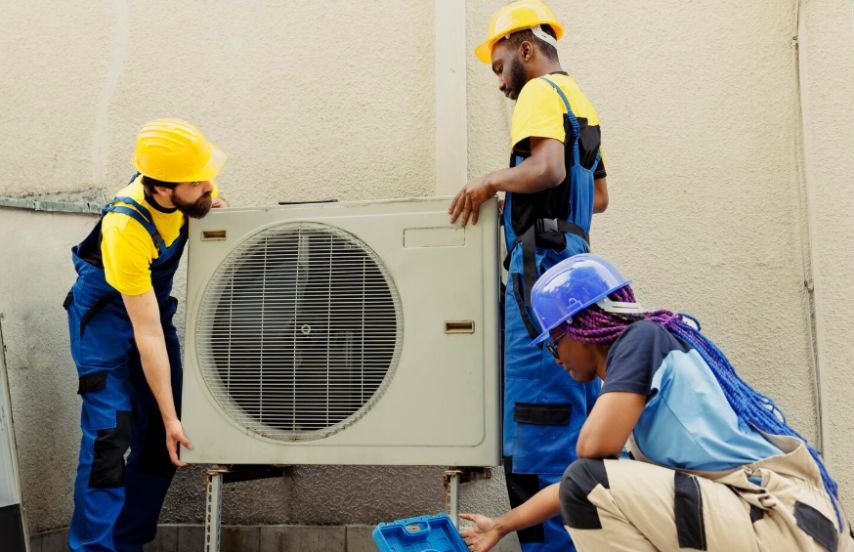
The good news is that most “warm air” failures fit into a handful of categories. The bad news is that the symptoms overlap enough to fool even attentive homeowners. That is why a system-level diagnosis is more valuable than checking one component in isolation.
Here are the most common culprits:
- Refrigerant leak
- Electrical short-cycling
- Failed capacitor
- Compressor failure
- Seized blower motor
- Dirty or restricted airflow components
- Thermostat or control issues
Some of these problems are obvious once identified. Others require specialized testing to find accurately. For example, a refrigerant leak is not something you should guess at. Efficient Systems Heating and Cooling uses tools such as an electronic leak detector to locate the actual source rather than simply adding refrigerant and hoping the problem goes away.
That distinction is central. If refrigerant escaped because of a leak, topping off the system without fixing the leak is only a temporary reset. The real issue remains.
Refrigerant problems are often hidden, not dramatic
Many people expect an AC refrigerant issue to be visible or noisy. Usually, it is not. A system may still blow air, but the air never gets cold enough because the refrigerant charge is too low to complete the heat exchange process properly.
That is why a thorough diagnosis is essential. It is not enough to know that the system is underperforming. You need to know why.
Electrical failures can look like cooling failures
A capacitor can weaken over time, and a short-cycling electrical issue can cause the unit to start and stop irregularly. When that happens, the AC may never stay on long enough to cool the air properly. The result looks like a refrigeration problem, but the actual failure lies in the electrical side of the system.
This is one reason Efficient Systems Heating and Cooling emphasizes the “Efficient Standard” forensic diagnostic. The goal is to identify the real fault, not the most obvious guess.
Why a Fast Fix Is Not the Same as the Right Fix
Homeowners in a cooling emergency often want the fastest possible answer. That is understandable. But in HVAC work, speed only helps if it is paired with accuracy. A quick recharge, a reset, or a temporary workaround may restore comfort briefly, but it does not necessarily protect the system from recurring failure.
A strong repair process should do three things at once:
- Identify the root cause
- Resolve the actual failure on site when possible
- Protect the system from repeated stress
That is the difference between patching symptoms and restoring function. Efficient Systems Heating and Cooling is built around that difference. Their service vehicles are stocked as “warehouses on wheels,” which means many high-failure parts can be replaced during the first visit instead of waiting for a return trip.
That approach is especially useful when the failure is common but disruptive, such as a capacitor, blower motor, or other standard component that can be tested and replaced quickly once the real issue is clear.
Short-cycling deserves more attention than it gets
Short-cycling is one of the most damaging patterns a cooling system can develop. The unit turns on, runs briefly, shuts off, and repeats the cycle without ever delivering stable comfort. Homeowners sometimes assume this is just an annoyance. It is more serious than that.
Repeated cycling can indicate a deeper fault in the controls, electrical system, refrigerant charge, or compressor performance. It also puts extra wear on the equipment, making early action one of the most practical tips for preventing expensive winter repairs.
Ignoring it can turn a manageable repair into a more expensive failure later.
Compressor issues are often the turning point
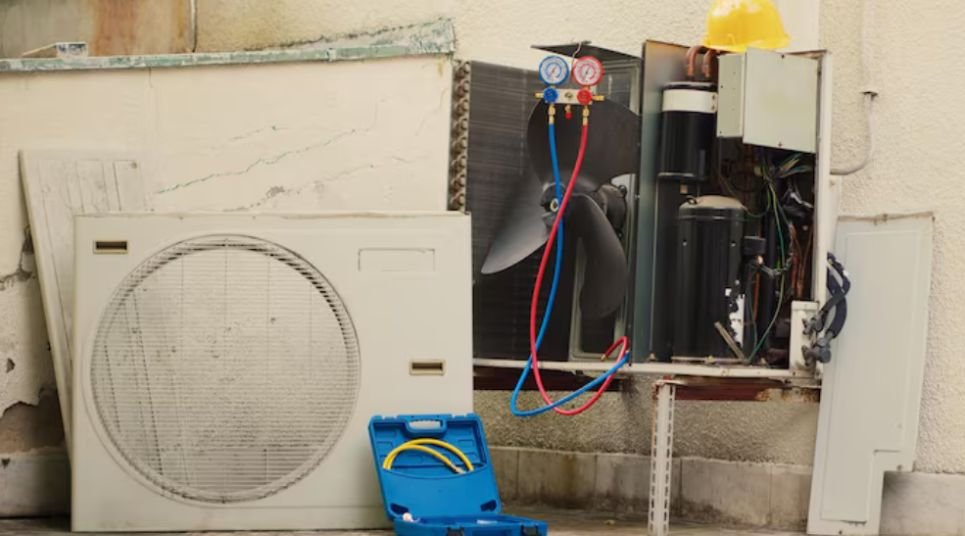
A compressor is central to the cooling process. When it begins to fail, the system may still move air but stop producing real cold air. In practical terms, this is where the difference between “running” and “cooling” becomes painfully clear.
Because compressor-related symptoms overlap with other faults, a careful diagnosis is essential before concluding anything. Efficient Systems Heating and Cooling focuses on that underlying logic so customers do not pay for repairs that miss the real problem.
What Strong Operators Do Differently in a Murray AC Repair Visit
In a good repair visit, the technician does not rush to a conclusion. They work through the system methodically, looking for the reason performance has fallen off. That process is especially important in a climate where losing cooling is more than an inconvenience.
Efficient Systems Heating and Cooling brings a practical advantage here: licensed technicians who can service all major brands, clear upfront pricing before work begins, and a diagnostic model designed to uncover failure points instead of guessing at them. That combination matters because it gives homeowners a clear path forward before the repair starts.
A strong operator also protects the home while working. Floor mats, clean work practices, and post-repair vacuuming may sound minor, but they reflect the same discipline that good diagnostics require. A careful company tends to be careful in every part of the job.
That attention to detail is valuable across home maintenance projects, whether a technician is servicing cooling equipment or a homeowner needs to learn how to repair drywall after access work, moisture damage, or an accidental opening.
The link between process and outcome is simple. Better diagnosis leads to better repair decisions. Better repair decisions reduce repeat breakdowns. That is why a homeowner looking for AC repair in Murray should pay attention not just to speed, but to how the company thinks about the problem.
The Real Goal Is Not Just Cool Air, but Reliable Comfort

A running AC that does not cool is more than a mechanical annoyance. It is a sign that the system has lost efficiency, balance, or integrity somewhere in the chain. If you treat it as a random inconvenience, you can waste time and money on temporary fixes. If you treat it as a diagnostic problem, the path forward becomes much clearer.
That is the value of working with a service company like Efficient Systems Heating and Cooling. The goal is not to make the symptom disappear for a day. The goal is to identify the cause, repair it correctly, and restore the system to dependable operation.
In the end, the most important question is not whether the AC is running. It is whether it is doing the job the system was built to do. When that answer is no, the smartest move is a careful, root-cause repair that addresses the real failure the first time.